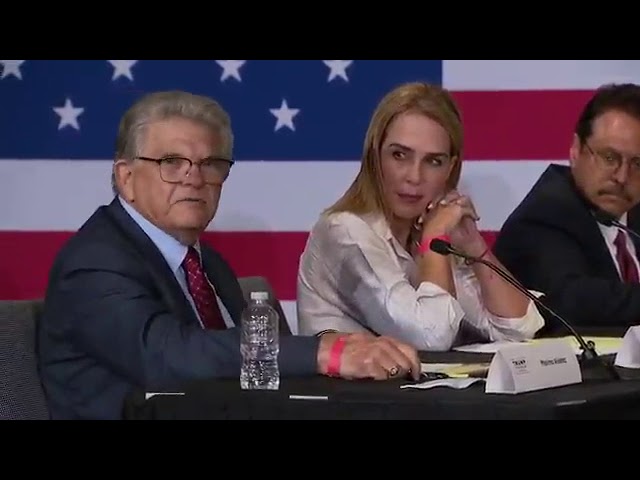
Dave Rubin responds to Harper’s Magazine cancel culture letter which states that a “new set of moral attitudes and political commitments have weaken our norms of open debate and toleration of differences in favor of ideological conformity”.
A Letter on Justice and Open Debate
July 7, 2020
The below letter will be appearing in the Letters section of the magazine’s October issue. We welcome responses at letters@harpers.org
Our cultural institutions are facing a moment of trial. Powerful protests for racial and social justice are leading to overdue demands for police reform, along with wider calls for greater equality and inclusion across our society, not least in higher education, journalism, philanthropy, and the arts. But this needed reckoning has also intensified a new set of moral attitudes and political commitments that tend to weaken our norms of open debate and toleration of differences in favor of ideological conformity. As we applaud the first development, we also raise our voices against the second. The forces of illiberalism are gaining strength throughout the world and have a powerful ally in Donald Trump, who represents a real threat to democracy. But resistance must not be allowed to harden into its own brand of dogma or coercion—which right-wing demagogues are already exploiting. The democratic inclusion we want can be achieved only if we speak out against the intolerant climate that has set in on all sides.
The free exchange of information and ideas, the lifeblood of a liberal society, is daily becoming more constricted. While we have come to expect this on the radical right, censoriousness is also spreading more widely in our culture: an intolerance of opposing views, a vogue for public shaming and ostracism, and the tendency to dissolve complex policy issues in a blinding moral certainty. We uphold the value of robust and even caustic counter-speech from all quarters. But it is now all too common to hear calls for swift and severe retribution in response to perceived transgressions of speech and thought. More troubling still, institutional leaders, in a spirit of panicked damage control, are delivering hasty and disproportionate punishments instead of considered reforms. Editors are fired for running controversial pieces; books are withdrawn for alleged inauthenticity; journalists are barred from writing on certain topics; professors are investigated for quoting works of literature in class; a researcher is fired for circulating a peer-reviewed academic study; and the heads of organizations are ousted for what are sometimes just clumsy mistakes. Whatever the arguments around each particular incident, the result has been to steadily narrow the boundaries of what can be said without the threat of reprisal. We are already paying the price in greater risk aversion among writers, artists, and journalists who fear for their livelihoods if they depart from the consensus, or even lack sufficient zeal in agreement.
This stifling atmosphere will ultimately harm the most vital causes of our time. The restriction of debate, whether by a repressive government or an intolerant society, invariably hurts those who lack power and makes everyone less capable of democratic participation. The way to defeat bad ideas is by exposure, argument, and persuasion, not by trying to silence or wish them away. We refuse any false choice between justice and freedom, which cannot exist without each other. As writers we need a culture that leaves us room for experimentation, risk taking, and even mistakes. We need to preserve the possibility of good-faith disagreement without dire professional consequences. If we won’t defend the very thing on which our work depends, we shouldn’t expect the public or the state to defend it for us.
| Elliot Ackerman Saladin Ambar, Rutgers University Martin Amis Anne Applebaum Marie Arana, author Margaret Atwood John Banville Mia Bay, historian Louis Begley, writer Roger Berkowitz, Bard College Paul Berman, writer Sheri Berman, Barnard College Reginald Dwayne Betts, poet Neil Blair, agent David W. Blight, Yale University Jennifer Finney Boylan, author David Bromwich David Brooks, columnist Ian Buruma, Bard College Lea Carpenter Noam Chomsky, MIT (emeritus) Nicholas A. Christakis, Yale University Roger Cohen, writer Ambassador Frances D. Cook, ret. Drucilla Cornell, Founder, uBuntu Project Kamel Daoud Meghan Daum, writer Gerald Early, Washington University-St. Louis Jeffrey Eugenides, writer Dexter Filkins Federico Finchelstein, The New School Caitlin Flanagan Richard T. Ford, Stanford Law School Kmele Foster David Frum, journalist Francis Fukuyama, Stanford University Atul Gawande, Harvard University Todd Gitlin, Columbia University Kim Ghattas Malcolm Gladwell Michelle Goldberg, columnist Rebecca Goldstein, writer Anthony Grafton, Princeton University David Greenberg, Rutgers University Linda Greenhouse Rinne B. Groff, playwright Sarah Haider, activist Jonathan Haidt, NYU-Stern Roya Hakakian, writer Shadi Hamid, Brookings Institution Jeet Heer, The Nation Katie Herzog, podcast host Susannah Heschel, Dartmouth College Adam Hochschild, author Arlie Russell Hochschild, author Eva Hoffman, writer Coleman Hughes, writer/Manhattan Institute Hussein Ibish, Arab Gulf States Institute Michael Ignatieff Zaid Jilani, journalist Bill T. Jones, New York Live Arts Wendy Kaminer, writer Matthew Karp, Princeton University Garry Kasparov, Renew Democracy Initiative Daniel Kehlmann, writer Randall Kennedy Khaled Khalifa, writer Parag Khanna, author Laura Kipnis, Northwestern University Frances Kissling, Center for Health, Ethics, Social Policy Enrique Krauze, historian Anthony Kronman, Yale University Joy Ladin, Yeshiva University Nicholas Lemann, Columbia University Mark Lilla, Columbia University Susie Linfield, New York University Damon Linker, writer Dahlia Lithwick, Slate Steven Lukes, New York University John R. MacArthur, publisher, writer | Susan Madrak, writer Phoebe Maltz Bovy, writer Greil Marcus Wynton Marsalis, Jazz at Lincoln Center Kati Marton, author Debra Mashek, scholar Deirdre McCloskey, University of Illinois at Chicago John McWhorter, Columbia University Uday Mehta, City University of New York Andrew Moravcsik, Princeton University Yascha Mounk, Persuasion Samuel Moyn, Yale University Meera Nanda, writer and teacher Cary Nelson, University of Illinois at Urbana-Champaign Olivia Nuzzi, New York Magazine Mark Oppenheimer, Yale University Dael Orlandersmith, writer/performer George Packer Nell Irvin Painter, Princeton University (emerita) Greg Pardlo, Rutgers University – Camden Orlando Patterson, Harvard University Steven Pinker, Harvard University Letty Cottin Pogrebin Katha Pollitt, writer Claire Bond Potter, The New School Taufiq Rahim Zia Haider Rahman, writer Jennifer Ratner-Rosenhagen, University of Wisconsin Jonathan Rauch, Brookings Institution/The Atlantic Neil Roberts, political theorist Melvin Rogers, Brown University Kat Rosenfield, writer Loretta J. Ross, Smith College J.K. Rowling, writer and philanthropist Salman Rushdie, New York University Karim Sadjadpour, Carnegie Endowment Daryl Michael Scott, Howard University Diana Senechal, teacher and writer Jennifer Senior, columnist Judith Shulevitz, writer Jesse Singal, journalist Anne-Marie Slaughter Andrew Solomon, writer Deborah Solomon, critic and biographer Allison Stanger, Middlebury College Paul Starr, American Prospect/Princeton University Wendell Steavenson, writer Gloria Steinem, writer and activist Nadine Strossen, New York Law School Ronald S. Sullivan Jr., Harvard Law School Kian Tajbakhsh, Columbia University Zephyr Teachout, Fordham University Cynthia Tucker, University of South Alabama Adaner Usmani, Harvard University Chloe Valdary Helen Vendler, Harvard University Judy B. Walzer Michael Walzer Eric K. Washington, historian Caroline Weber, historian Randi Weingarten, American Federation of Teachers Bari Weiss Sean Wilentz, Princeton University Garry Wills Thomas Chatterton Williams, writer Robert F. Worth, journalist and author Molly Worthen, University of North Carolina at Chapel Hill Matthew Yglesias, Vox Co-founder Emily Yoffe, journalist Cathy Young, journalist Fareed Zakaria |
Institutions are listed for identification purposes only.