

Beijing has to revisit its strategies and reconsider its approach to the Trump administration, experts say.
The world had a moment of clarity during the Israel–Iran conflict.
For years, analysts have noted that China is closing in on the United States as a peer competitor, whether in terms of high-tech industries, naval fleets, or the size of its diplomatic corps.
That power shift seemed to have also played out in the Middle East, a region where the United States has traditionally held significant influence.
Two years ago, Beijing brokered the normalization of diplomatic relations between Iran and Saudi Arabia. Later the same year, the China-led BRICS bloc, designed to counterbalance the U.S.-led Western democracies, admitted four new members from the region: Egypt, Iran, Saudi Arabia, and the United Arab Emirates.
The bloc was formed by Brazil, Russia, India, and China in 2009 and expanded to include South Africa in 2010.
However, the action of the United States—and the inaction of China—during the 12-day Israel–Iran conflict revealed that the power gap between Beijing and Washington remains sizable.
The United States joined its ally Israel in the conflict on June 21 by attacking key Iranian nuclear sites with 30,000-pound bunker-buster bombs. Two days later, President Donald Trump announced a cease-fire between Israel and Iran. The truce appears to be holding so far.
By contrast, Beijing’s support for Iran remained largely rhetorical.
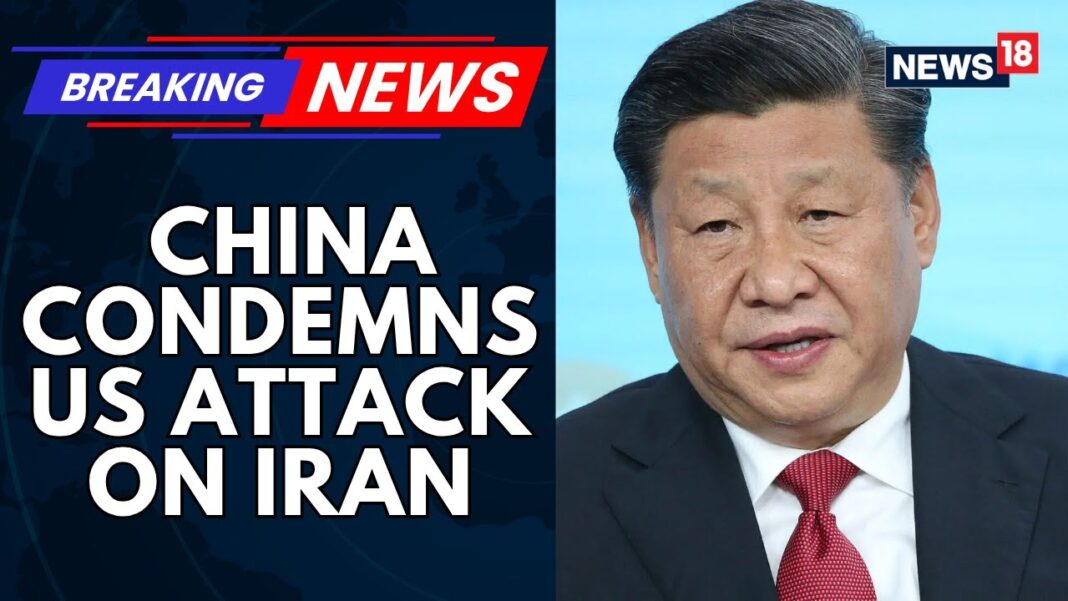
The Chinese regime condemned Israel and criticized the United States over the strikes on Iran. It also released joint statements with member states of BRICS and the Shanghai Cooperation Organization, a China- and Russia-led security grouping, expressing “grave concern” that the attacks on Iran violated international law.
The revelation of the power gap between the United States and China means that countries will move closer into Washington’s orbit, according to Yeh Yao-yuan, a professor of international studies at the University of St. Thomas in Houston.
That means Middle Eastern countries will shift from a pro-Beijing position to a neutral stance in the contest between China and the United States as the world moves into two camps led by the two powers, he told The Epoch Times.
Beijing is keenly aware that the U.S. focus is on Asia, particularly China, according to Christopher Balding, a senior fellow at the UK-based Henry Jackson Society. The Chinese regime deliberately kept a low profile during the Israel–Iran military conflict, he said.
“The more that they can keep the U.S. working on other non-China issues, I think that they see it as better for them,” Balding, also a contributor to The Epoch Times, told the publication.
According to China expert Alexander Liao, the Chinese Communist Party (CCP) is uncertain about its next steps.
“Beijing has realized that its existing assessment of the world—that the East is rising and the West is declining—doesn’t hold anymore,” Liao told The Epoch Times.
“Should they change the course of their strategic directions? If so, how? They haven’t made up their mind yet.”
By Terri Wu