

Institutional Investor: There’s an Oligopoly in Asset Management. This Researcher Says It Should Be Broken Up.

5Mind. The Meme Platform
Institutional Investor

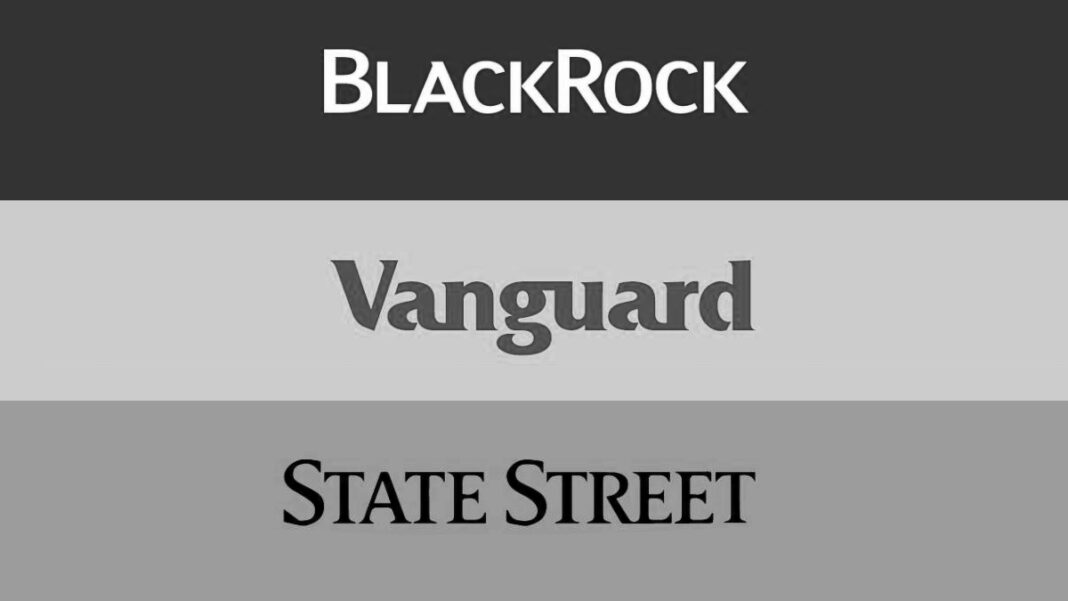
BlackRock, Vanguard, and State Street control $15 trillion, posing challenges to corporate governance and competition, and concentrating power in the hands of a few, according to a new report.

Jack Bogle championed index funds as a way to democratize investments. Now the three biggest index fund managers pose a new threat, a former Federal Reserve staffer argues.

“Asset management firms have become a part of a new ‘money trust’ — a system of financial architecture dominated by a few large banks, private equity firms, and hedge funds,” Graham Steele, director of the Corporations and Society Initiative at Stanford Graduate School of Business, wrote in a new report expected to be published Tuesday. The working paper is being published by the American Economic Liberties Project, a non-profit focused on antitrust policy.

According to the paper, the stock holdings of BlackRock, Vanguard, and State Street give them “outsized influence” in corporate elections and reward anti-competitive behavior among companies in a given sector. The sheer size and interconnectedness of the three firms influence the stability of the financial system, and they benefit by providing critical infrastructure, such as custody and technology platforms.

Even though BlackRock and the other firms don’t own the underlying assets that they manage, they still control many activities, including voting shares, Steele said. According to the paper, BlackRock, Vanguard, and State Street manage over $15 trillion in global assets, which is equal to approximately three-quarters of the U.S. gross domestic product. The asset management industry has also grown more concentrated over the last decade, with these three firms attracting 82 percent of all investor money over the time period. BlackRock, State Street, and Vanguard also control between 73 percent and 80 percent of the exchange-traded fund market, according to Steele.

That dominance means that when combined, the “Big Three” are the largest shareholder of 88 percent of firms in the S&P 500.

This concentrated ownership has several potential consequences, according to Steele. One example is the rise in stock buybacks. Research from Lucian A. Bebchuk and Scott Hirst has found that companies with a high amount of index fund ownership have increased stock buybacks more rapidly than peers with more diverse ownership.

The largest asset managers also provide related technology and financial services to external firms that further increase their power and influence. BlackRock, for example, has its Aladdin platform, while State Street has its global custody business.

Ironically, low fees, which benefit investors, have driven much of the concentration in the asset management industry.

“The outsized footprint of a few large financial companies poses new issues for the governance of corporate America, the competitiveness of our economy, the concentration of political power, and the stability of financial markets,” Steele wrote.

By Julie Segal

Read Full Article on InstitutionalInvestor.com

Contact Your Elected Officials
The Thinking Conservative
The Thinking Conservativehttps://www.thethinkingconservative.com/
The goal of THE THINKING CONSERVATIVE is to help us educate ourselves on conservative topics of importance to our freedom and our pursuit of happiness. We do this by sharing conservative opinions on all kinds of subjects, from all types of people, and all kinds of media, in a way that will challenge our perceptions and help us to make educated choices.

The USPS is Going Broke!   

The USPS Postmaster General warned that without lifting its $15B borrowing cap, the agency could struggle to pay workers and vendors by 2027.

Comey and Morens Indicted? Color Me Skeptical

The Justice Department has announced respective prosecutions of former FBI Director and Russiagate architect James Comey and Fauci capo Peter Morens.

Questions Remain After the WHCD Assassination Attempt   

Americans have a hunger to know and understand what happened during the White House Correspondents Dinner (WHCD) assassination attempt.

Direct Election of U.S. Senators: Reform or Mistake?

The direct election of U.S. Senators diminished federalism, stripped states of checking federal power and greatly expanded federal power.

Don’t Miss the Jazz Renaissance Happening All Around You

A genuine renaissance is underway in jazz, carried by musicians of astonishing ability and artistic character.

FDA Says Most Infant Formula Has Low or Undetectable Levels of Contaminants

Most infant formula tested by the Food and Drug Administration had low or undetectable levels of contaminants such as lead, the agency said.

Rampant Fraud Corrupts the Health Care System, Dr. Oz Says

Fraud is pervasive in the medical industry and undermines the integrity of the entire health care system, Dr. Mehmet Oz said on April 28.

Elon Musk Takes the Stand at OpenAI Trial

Elon Musk accused OpenAI CEO Sam Altman of defrauding him and betraying the company’s founding mission: to operate as an open-source nonprofit.

DC Shooting Puts Focus on Security Gaps

The attempted assassination of the President at the WHCD raised serious concerns about presidential security and exposed major protection failures.

King Charles, Queen Camilla Greeted by President Trump, First Lady

President Donald Trump and First Lady Melania Trump welcomed King Charles III and Queen Camilla of the UK at the South Porticos of the White House on April 27.

Treasury Sanctions Iran-Linked Chinese Oil Refinery, 40 Vessels

The Treasury Department sanctioned a Chinese refinery and 40 shipping firms and vessels found to be providing a lifeline to the Iranian oil economy.

Trump Admin Begins Process to Downgrade Marijuana Classification

The Trump administration announced plans to reclassify approved marijuana products as a less dangerous drug under federal law.

Gas Prices Will Return to Low Levels After Iran Conflict Ends, Bessent Says

Treasury Sec. Scott Bessent said relatively high gas prices will not last long but any change is contingent on when the US and Iran cease hostilities.
spot_img

Related Articles

Popular Categories

MAGA Business Central