

Military leaders faced questions on the Iran conflict, personnel decisions, and a $1.5 trillion military budget request during two days of testimony.
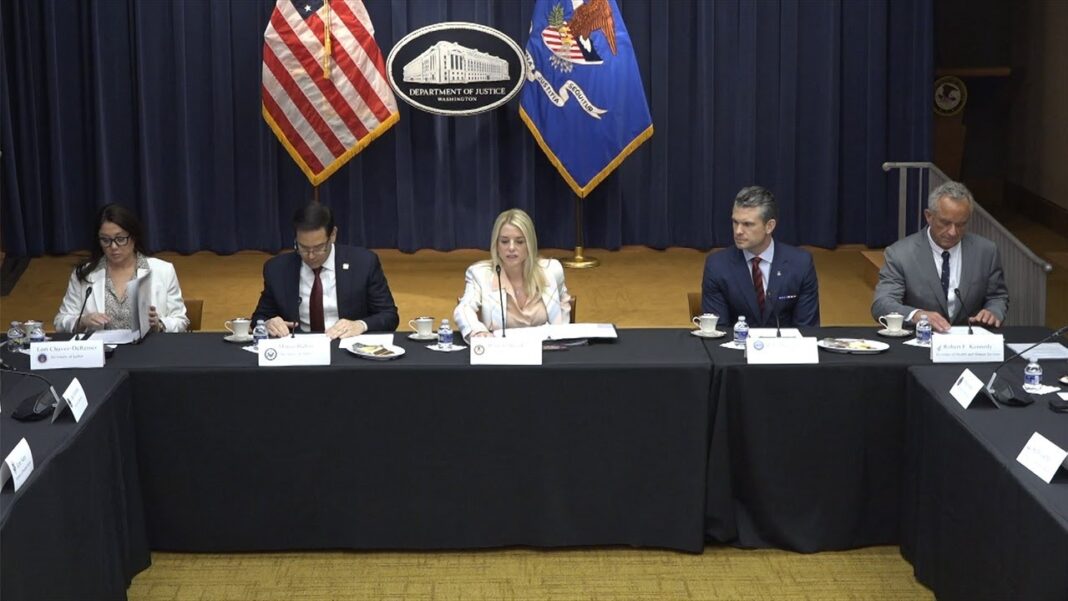
Secretary of War Pete Hegseth and Chairman of the Joint Chiefs of Staff Gen. Dan Caine faced numerous pointed questions about the Iran conflict in their first set of public hearings since the fighting began on Feb. 28.
Hegseth and Caine testified in back-to-back hearings before the House and Senate Armed Services committees on April 29 and April 30, as the Pentagon seeks congressional support for a record-setting $1.5 trillion in military and defense funding in fiscal 2027.
The first hearing, on the House side, lasted about six hours. The second day, in the Senate, lasted another three hours.
Across the two hearings, Democrats repeatedly engaged Hegseth in contentious exchanges. Republicans largely affirmed their support for the Trump administration for its handling of the Iran conflict and its military funding request.
Here are four takeaways from the two days of testimony.
Democrats Scrutinize Iran War
In his opening statement in both hearings, Hegseth said U.S. forces had achieved great successes in the campaign against Iran in just a matter of weeks. He went on to criticize lawmakers, primarily Democrats, for casting doubt on the recent combat operations in the Middle East.
“The biggest adversary we face, at this point, are the reckless, feckless, and defeatist words of congressional Democrats and some Republicans,” he said.
During their speaking opportunities on the first day, Reps. Patrick Ryan (D-N.Y.) and Chris Deluzio (D-Pa.) both raised questions about whether U.S. troops positioned at Port Shuaiba, Kuwait, had sufficient protection at the start of the conflict.
Six U.S. soldiers were killed and dozens more were injured when an Iranian drone struck the Kuwaiti port facility on March 1.
Several Democrats described the conflict as costly and unpopular at home, with Rep. John Garamendi (D-Calif.) describing it as a “quagmire.”
“This war of choice is a political and economic disaster at every level,” Garamendi said. “Despite the president’s promise to lower the cost of living, gas prices are up 40 percent, and inflation is soaring.”
Hegseth responded that Garamendi’s comment amounted to “handing propaganda to our enemies.”
“Shame on calling this a ‘quagmire’ two months in,” Hegseth said.
Democrats in both the House and Senate committees also raised questions about a strike on a girls’ school in Iran on the first day of the conflict. Hegseth said the strike is the subject of an ongoing military investigation.
Sen. Tammy Duckworth (D-Ill.), on the second day of the hearings, argued that while the Trump administration has touted the sinking of Iran’s fleet of traditional warships, it has understated the threat posed by the Iranian Islamic Revolutionary Guard Corps’ (IRGC) fleet of smaller attack speed boats.
“Iran has long invested in this second asymmetric navy, specifically to develop capabilities that would be difficult for conventional U.S. military forces to target,” Duckworth said.
By Ryan Morgan