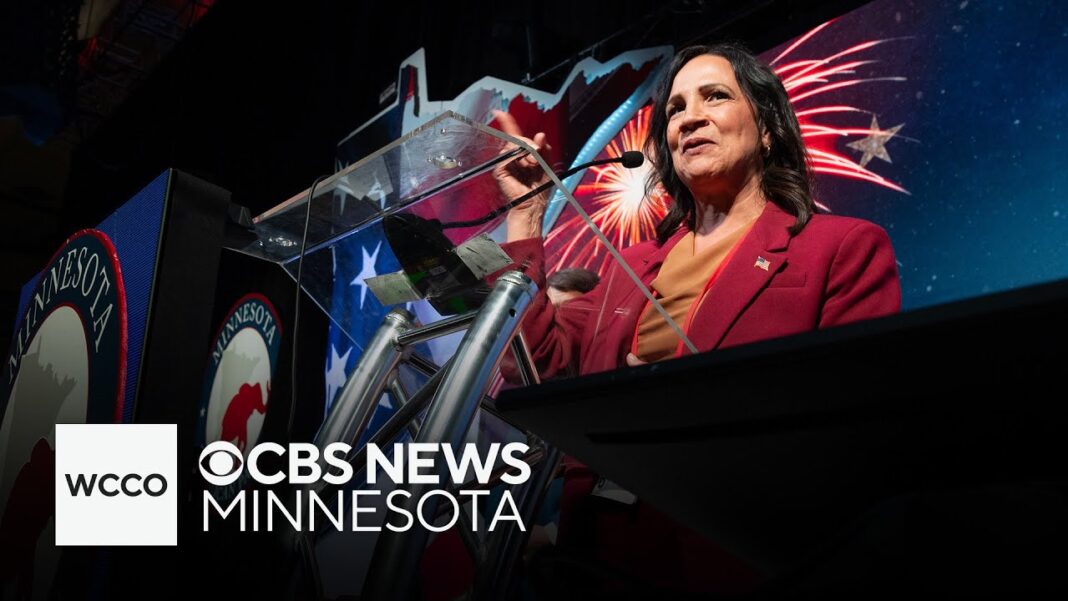
Marques emerged victorious from a six-way primary race after the state redrew its congressional districts.
MONTGOMERY, Ala.—State Rep. Rhett Marques won Alabama’s District 2 Republican primary on Aug. 11, making him the nominee for the 2026 midterm congressional election.
Backed by endorsements from President Donald Trump and Alabama Sen. Katie Britt (R), Marques beat out five other candidates in the race.
Marques thanked his supporters in a post on X, adding that “The stakes in November could not be higher.”
“If you want more money in your pockets, safe streets for your kids to play on, strong communities, and our Christian values to be preserved for our kids and their kids, I’d be proud to earn your vote.”
He now faces a battle against incumbent Democratic Rep. Shomari Figures, who won the seat in 2024 after a Supreme Court decision forced the state to redraw its congressional map, adding a second mostly-minority district.
The Supreme Court shifted course on that ruling earlier this year, allowing Alabama to revert to a map in which District 2 is expected to favor Republicans by seven points.
The Second Congressional District primary was a bit complicated: Before the redistricting decision came down, Figures and GOP challenger Hampton Harris were set to advance to the general election unchallenged.
But after the Supreme Court decision, Alabama reworked the lines for Districts 1, 2, 6, and 7 and voided earlier primary results. That allowed candidates who previously lost in District 1—including Marques—another chance at a seat in Congress by switching to the District 2 race.
Six candidates ran in total, with Marques clinching around 50 percent of the vote when the race was called. Local real estate broker Hampton Harris took around 20 percent, with former USDA official David Matthews got around 18 percent of the vote.
At the same time, Tabitha Isner, former vice chair of Alabama’s Democratic party, urged the state’s Democrats to influence the race by voting for a candidate other than Marques.
The state has an open primary system, and because Figures is the only Democratic candidate, that freed up Democrats to vote for whomever they wished.
Isner’s idea was to shift the race to a GOP candidate she thought Figures might have an easier time beating in November. She floated the idea in July, but kept her cards close to her chest until the morning of the election.