
Save the Constitution From Big Tech

5Mind. The Meme Platform

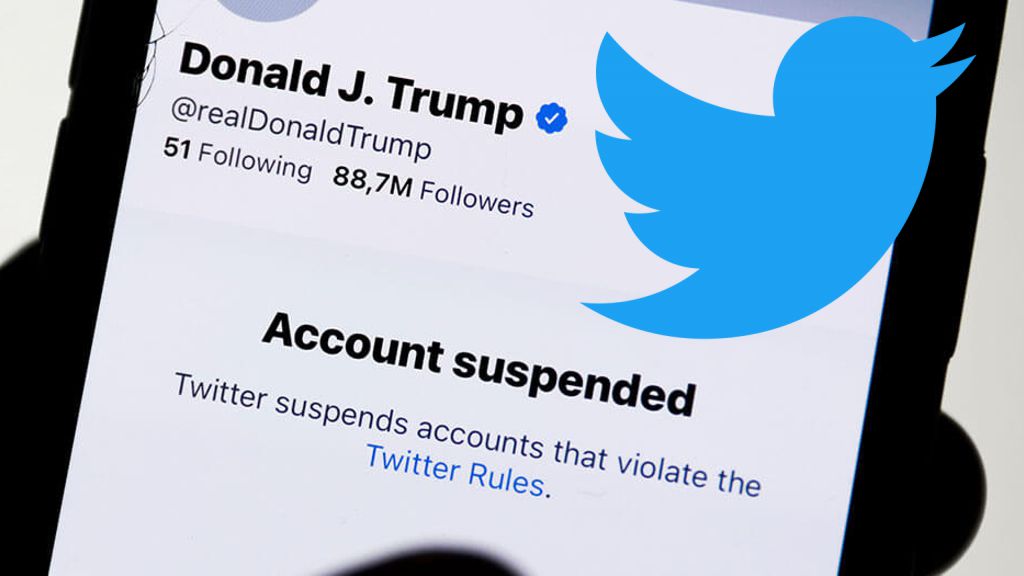
Facebook and Twitter banned President Trump and numerous supporters after last week’s disgraceful Capitol riot, and Google, Apple and Amazon blocked Twitter alternative Parler—all based on claims of “incitement to violence” and “hate speech.” Silicon Valley titans cite their ever-changing “terms of service,” but their selective enforcement suggests political motives.

Conventional wisdom holds that technology companies are free to regulate content because they are private, and the First Amendment protects only against government censorship. That view is wrong: Google, Facebook and Twitter should be treated as state actors under existing legal doctrines. Using a combination of statutory inducements and regulatory threats, Congress has co-opted Silicon Valley to do through the back door what government cannot directly accomplish under the Constitution.

It is “axiomatic,” the Supreme Court held in Norwood v. Harrison (1973), that the government “may not induce, encourage or promote private persons to accomplish what it is constitutionally forbidden to accomplish.” That’s what Congress did by enacting Section 230 of the 1996 Communications Decency Act, which not only permits tech companies to censor constitutionally protected speech but immunizes them from liability if they do so.

The justices have long held that the provision of such immunity can turn private action into state action. In Railway Employees’ Department v. Hanson (1956), they found state action in private union-employer closed-shop agreements—which force all employees to join the union—because Congress had passed a statute immunizing such agreements from liability under state law. In Skinner v. Railway Labor Executives Association(1989), the court again found state action in private-party conduct—drug tests for company employees—because federal regulations immunized railroads from liability if they conducted those tests. In both cases, as with Section 230, the federal government didn’t mandate anything; it merely pre-empted state law, protecting certain private parties from lawsuits if they engaged in the conduct Congress was promoting.

Section 230 is the carrot, and there’s also a stick: Congressional Democrats have repeatedly made explicit threats to social-media giants if they failed to censor speech those lawmakers disfavored. In April 2019, Louisiana Rep. Cedric Richmond warned Facebook and Google that they had “better” restrict what he and his colleagues saw as harmful content or face regulation: “We’re going to make it swift, we’re going to make it strong, and we’re going to hold them very accountable.” New York Rep. Jerrold Nadler added: “Let’s see what happens by just pressuring them.”

By Vivek Ramaswamy and Jed Rubenfeld

Read Full Article on WSJ.com

Contact Your Elected Officials
The Thinking Conservative
The Thinking Conservativehttps://www.thethinkingconservative.com/
The goal of THE THINKING CONSERVATIVE is to help us educate ourselves on conservative topics of importance to our freedom and our pursuit of happiness. We do this by sharing conservative opinions on all kinds of subjects, from all types of people, and all kinds of media, in a way that will challenge our perceptions and help us to make educated choices.
00:02:04

Forged on the frontier

George Washington is widely known as a general and president, but his early life remains obscured by myth, legend, and misunderstanding.
00:02:52

A bobblehead too far

The Orioles did not just hand out a bobblehead. They sent a message that the legacy of their own players is not enough to draw.

Congress fumbles college sports

College sports landscape is a dumpster fire and every sports reporter, broadcaster and fan believes Congress needs to stay out of it.

The Hating Game

The Democrat Party game show should be titled "The Hating Game", played by pitting one class, race, or identity against another for political power.
00:09:50

The Invasion Of The Ballot Snatchers

As election results loom, California faces ballot controversies in a real-life political drama that raises concerns about election integrity.

Ro Khanna Becomes First in Congress to Sign Pledge Rejecting AIPAC Money

Rep. Ro Khanna (D-Calif.) become the first member of Congress to sign a pledge to refuse campaign money from AIPAC and other pro-Israel groups.
00:04:58

What to Know About the Alleged Plot to Attack the White House UFC Event

Five men have been charged in an alleged plot to carry out a mass-casualty attack at a UFC event on White House grounds.
00:24:56

Violent Antifa Activists ‘Infiltrated’ Peaceful Protesters in Minnesota: US Attorney

An Antifa group “infiltrated and exploited lawful protests” while they disrupted federal immigration enforcement officers earlier this year, alleged Minnesota U.S. Attorney Daniel Rosen.
00:01:01

Trump Cancels Senate Hearing for DNI Pick, Alleges Democrats Broke Agreement

President Donald Trump on June 17 canceled a hearing slated for June 17 for his pick to be the next director of national intelligence (DNI).
00:01:33

Trump Unveils New Air Force One Plane

President Trump unveiled the plane that will serve as the new Air Force One, a Boeing 747-8 luxury jet that was gifted to the US by the Qatari government in 2025.
00:01:27

Trump Threatens 100 Percent Tariff on French Wines Over Digital Services Tax

Trump threatened to impose a 100% tariff on French wines and champagne unless France eliminates its digital services tax on large American tech companies.

Trump Heads to G7 Summit in France: Here’s What to Expect

U.S. President Donald Trump is en route to France on June 15 to attend the annual G7 summit, just hours after announcing a deal with Iran.
00:01:27

Trump Reopens Pacific Marine Monuments to Commercial Fishing

President Donald Trump on Thursday issued a proclamation reopening large portions of several Pacific marine national monuments to commercial fishing.
spot_img

Related Articles

Popular Categories

MAGA Business Central