

‘Only by properly submitting these disastrous deals as treaties will the senate be able to satisfy its constitutional role to provide advice and consent in the event any future administration attempts to revive them’
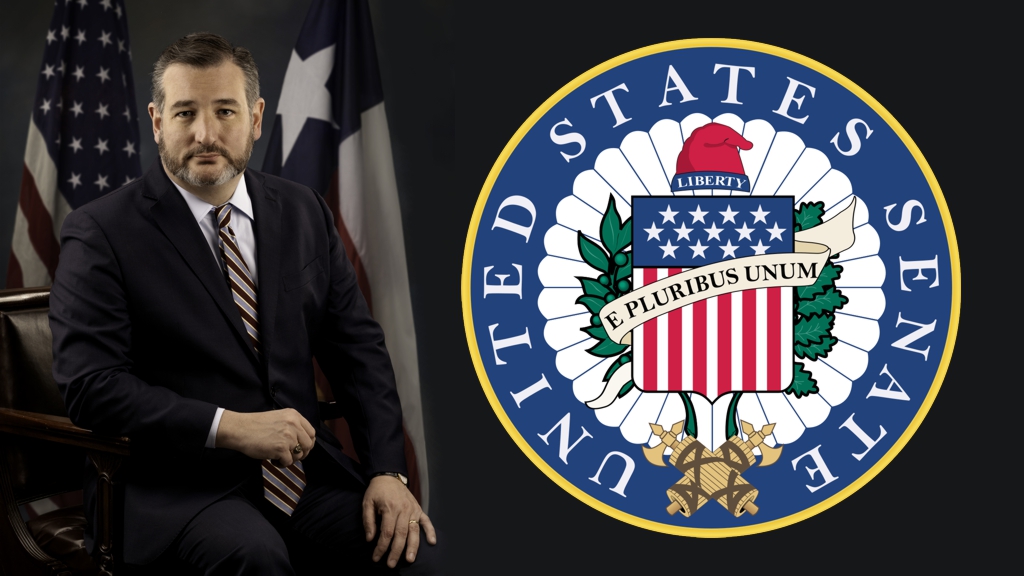
WASHINGTON, D.C. – U.S. Sen. Ted Cruz (R-Texas), member of the Senate Foreign Relations Committee, this week called on the Trump administration to submit both the Iran Nuclear Deal and Paris Climate Agreement to the Senate as formal treaties.
In a letter to President Trump and Secretary of State Mike Pompeo, Sen. Cruz slammed the Obama-Biden administration for undermining the Senate’s constitutional role in both the Iran Nuclear Deal and Paris Agreement negotiations, writing:
“Multiple previous administrations […] have undermined the Senate’s constitutional role by negotiating significant international agreements and then refusing to submit them to the Senate for its advice and consent. Most recently-and most egregiously-President Obama refused to submit either the Joint Comprehensive Plan of Action (the ‘Iran Deal’), or the United Nations Paris Climate Agreement (the ‘Paris Agreement’) to the Senate as a treaty.”
He continued:
“These agreements could and should have been submitted as treaties given their sweeping scope and immense implications for American foreign and domestic policy. The Paris Agreement, for example, was lauded as the ‘most ambitious climate change agreement in history.’ The Iran Deal, meanwhile, was situated as ‘the most consequential foreign policy debate that our country has had since the invasion of Iraq.'”
He concluded, urging the Trump administration to submit both agreements to the Senate as formal treaties:
“Your administration has rightly changed course as a matter of substantive policy by withdrawing from both the Iran Deal and the Paris Agreement. This was a great accomplishment for the American people.
“I urge you now also to remedy the harm done to the balance of powers by submitting the Iran Deal and the Paris Agreement to the Senate as treaties. Only by submitting them to the Senate will the Senate be able to satisfy its constitutional role to provide advice and consent in the event any future administration attempts to revive these dangerous deals.”
Sen. Cruz has led the fight against the Obama-Biden Iran Nuclear Deal since it was first negotiated. Since the U.S. withdrawal, he has pushed for an end to oil waivers, an end to nuclear waivers, and for invoking the U.N. snapback mechanism to restore international sanctions on Iran. In September, Sen. Cruz applauded the Trump administration for enforcing snapback sanctions on Iran and finalizing the end of the Iran Nuclear Deal. Learn more about his fight here.
In 2017, Sen. Cruz urged President Trump to act on his campaign promise to “rip up” the Paris Climate Agreement in an op-ed on CNN.com, where he wrote, “We simply cannot afford an agreement that puts thousands of Americans out of work, increases their energy costs and devastates our core industries.” Read Sen. Cruz’s op-ed here. Shortly thereafter, President Trump announced the U.S. would withdraw from the agreement.
Read the full letter here and below.
December 21, 2020
The Honorable Donald J. Trump
President of the United States
The White House
1600 Pennsylvania Ave NW
Washington, D.C. 20500
The Honorable Michael Pompeo
Secretary of State
U.S. Department of State
2201 C. Street NW
Washington, D.C. 20230
Dear President Trump and Secretary Pompeo,
The Constitution grants the Senate a significant, unique, and indispensable role in developing American foreign policy through treaties. Specifically, Article II, Section 2, Clause 2, provides that the President “shall have the Power, by and with the Advice and Consent of the Senate, to make Treaties, provided two-thirds of the Senators present concur.”
Multiple previous administrations, however, have undermined the Senate’s constitutional role by negotiating significant international agreements and then refusing to submit them to the Senate for its advice and consent. Most recently-and most egregiously-President Obama refused to submit either the Joint Comprehensive Plan of Action (the “Iran Deal”), or the United Nations Paris Climate Agreement (the “Paris Agreement”) to the Senate as a treaty.
These agreements could and should have been submitted as treaties given their sweeping scope and immense implications for American foreign and domestic policy. The Paris Agreement, for example, was lauded as the “most ambitious climate change agreement in history.” The Iran Deal, meanwhile, was situated as “the most consequential foreign policy debate that our country has had since the invasion of Iraq.”
That is why numerous Senators demanded that the administration submit both agreements to the Senate for advice and consent. Thirty-four Senators co-sponsored a resolution “expressing the sense of Congress that the President should submit the Paris climate change agreement to the Senate for its advice and consent.” Because Obama refused to do so, Senator Risch, the current Chairman of the Senate Foreign Relations Committee, later issued a joint statement with Senator Crapo stating: “There are many reasons the Paris Climate Accord was a bad deal. Not the least of which is that it was agreed to unilaterally by the Obama Administration, violating our Constitution’s requirement that all treaties be passed by a two-thirds vote in the Senate.” Similarly, in an interview addressing the Iran Deal, Senator Risch stated that President Obama “needed to submit it to the United States Senate for ratification under the Constitution. It was a treaty.”
The only reason the Obama administration refused to submit these agreements to the Senate as treaties was that it knew that the agreements were deeply unpopular and doomed for defeat.
Then-Secretary of State John Kerry was shockingly candid about this end-run around the Senate’s Constitutional prerogative. When asked by Rep. Ribble of Wisconsin why the deal was not considered a treaty, he replied: “I spent quite a few years trying to get a lot of treaties through the United States Senate, and frankly, it’s become physically impossible. That’s why. Because you can’t pass a treaty anymore.” The same was true for the Paris Agreement. The New York Times in 2014 reported that “the Obama administration is working to forge a sweeping international climate change agreement to compel nations to cut their planet-warming fossil fuel emissions, but without ratification from Congress” because there was “no chance” that the “Senate [would] ratify a climate change treaty in the near future.”
The Obama administration attempted to justify its decision to sideline the Senate by structuring the agreements in a way that allowed it to publicly assert that the agreements were not legally binding and therefore not treaties subject to the Senate’s advice and consent-even though an Obama-era State Department legal memorandum determined the Paris Agreement “does contain legally binding obligations that would apply to the United States,” and then-President Obama himself contextualized the Iran Deal by saying that “[a]s was true in previous treaties, it does not resolve all problems.” But this strategic restructuring is itself a significant threat to the separation of powers and the Senate’s constitutional role in foreign affairs. As the nonpartisan Congressional Research Service wrote in a canonical 2001 study of the treaty power prepared for the United States Committee on Foreign Relations:
The main threat of erosion of the Senate treaty power comes not from the international agreements that are submitted as treaties, however, but from the many international agreements that are not submitted for its consent. In addition to concluding hundreds of executive agreements, Presidents have made important commitments that they considered politically binding but not legally binding. Maintaining the Senate role in treaties requires overseeing all international agreements to assure that agreements that should be treaties are submitted to the Senate.
Simply put, a President does great damage to the separation of powers if he arrogates the treaty power entirely to himself by altering the terms of an agreement so that most or all of the provisions are not legally binding, even as they politically and practically commit United States to a course of action opposed by Congress. See 11 F.A.M. § 723 (listing criteria for determining whether an agreement is a treaty, including “the extent to which the agreement involves commitments or risks affecting the nation as a whole” and the “preference of the Congress”).
Your administration has rightly changed course as a matter of substantive policy by withdrawing from both the Iran Deal and the Paris Agreement. This was a great accomplishment for the American people.
I urge you now also to remedy the harm done to the balance of powers by submitting the Iran Deal and the Paris Agreement to the Senate as treaties. Only by submitting them to the Senate will the Senate be able to satisfy its constitutional role to provide advice and consent in the event any future administration attempts to revive these dangerous deals.
Sincerely,
/s/
###