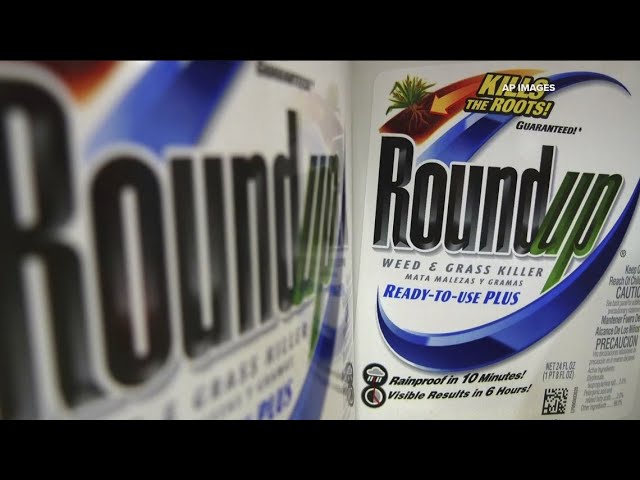


Monsanto had argued that the legal doctrine of preemption shielded it from any state-level claims.
Agribusiness Monsanto scored a significant victory at the Supreme Court on June 25 when the justices reversed a lower court ruling that opened the company up to liability for its weedkiller Roundup.
The justices handed down a 7–2 decision in one of the most consequential decisions this year. They said that a federal law preempted state law that served as the basis for a verdict against Monsanto.
The case, Monsanto v. Durnell, involved a man, John Durnell, who was diagnosed with cancer after exposure to Roundup. A Missouri jury awarded him damages based on the idea that Monsanto had failed to follow a state law requiring warnings about risks for things like cancer.
Monsanto told the Supreme Court that the verdict was flawed because of a legal doctrine known as preemption, which says that federal law takes precedence over state law when the two conflict. In this case, Monsanto said that the federal government had already regulated Roundup’s key ingredient, glyphosate, through the Federal Insecticide, Fungicide, and Rodenticide Act (FIFRA).
Under that law, the Environmental Protection Agency (EPA) approved glyphosate’s use and has not required additional labeling related to cancer risks.
“Durnell’s state tort claim would require Monsanto to add a cancer warning to Roundup’s label even though federal law requires Monsanto to use the EPA-approved label without a cancer warning,” Justice Brett Kavanaugh wrote in the majority opinion.
“Because Durnell’s state tort claim would impose a pesticide labeling requirement ‘in addition to or different from’ the label required by EPA, FIFRA expressly preempts Durnell’s claim.”
The June 23 decision reversed a state appellate ruling upholding Durnell’s verdict.
Justices Neil Gorsuch and Ketanji Brown Jackson dissented from the decision.
“Ultimately, the effect of the majority’s interpretation is both remarkable and regrettable, for it unjustifiably closes the courthouse doors to state tort plaintiffs like Durnell,” Jackson wrote.
This is a developing story. Check back for updates.
By Sam Dorman