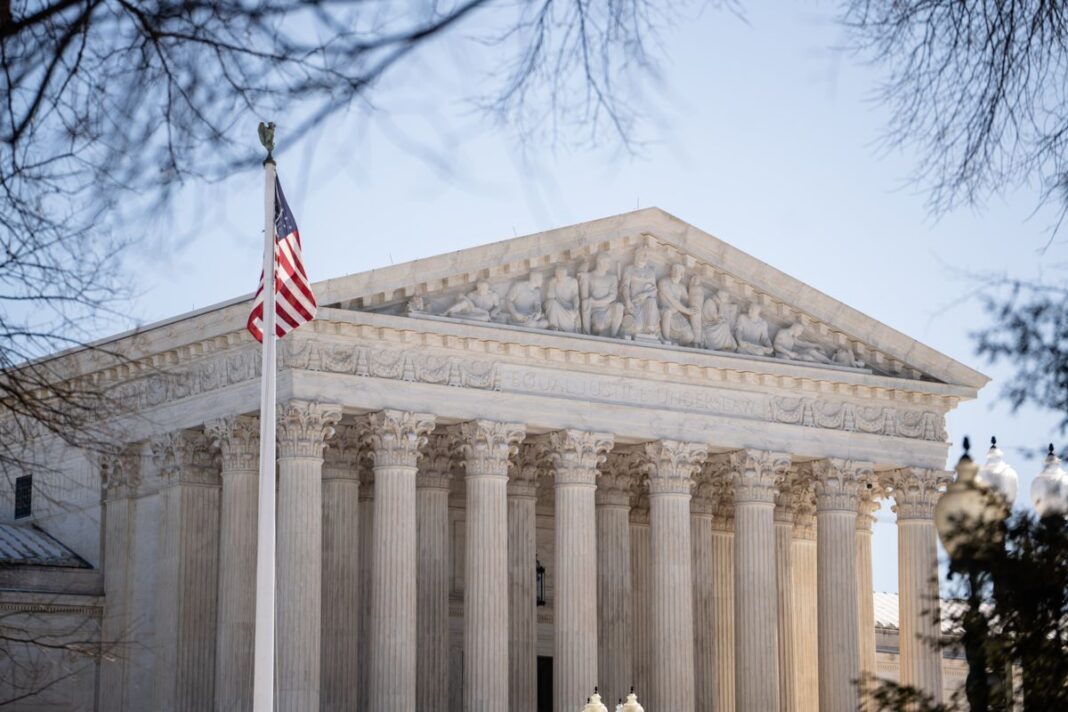


Big decisions are expected on birthright citizenship, deportation protections, and the president’s ability to fire high-level officials.
The Supreme Court is expected to issue a series of rulings on President Donald Trump’s policies in the coming days that are poised to define the power of the executive branch and immigration procedures.
Perhaps the most anticipated case is its ruling on Trump’s attempt to limit birthright citizenship. That decision, along with one on temporary protected status, could significantly hinder Trump’s immigration agenda. Other cases focus on Trump’s attempt to fire high-level federal officials and could result in landmark decisions about the separation of powers.
Here are the top Trump cases to watch as the Supreme Court’s 2025–2026 term comes to an end.
Birthright Citizenship
Trump signed an executive order on Inauguration Day stating that the federal government would no longer recognize the children of illegal immigrants and other temporary visitors as citizens. The case, Trump v. Barbara, emerged amid many lawsuits over the president’s order.
Several federal judges blocked the order on the basis that it violated the citizenship clause of the 14th Amendment.
That portion of the amendment says that “All persons born or naturalized in the United States, and subject to the jurisdiction thereof, are citizens of the United States and of the State wherein they reside.”
The Supreme Court ruled on this issue in 1898 with its decision in United States v. Wong Kim Ark. It said the amendment granted citizenship to a man whose Chinese parents were permanently domiciled in the United States when he was born.
Judges cited that decision, saying it showed the Supreme Court already held policies like Trump’s were unconstitutional. Trump, meanwhile, said the decision was more limited in that it only clarified that birthright citizenship applied to people whose parents had stronger ties to the country, such as permanent residence.
The American Civil Liberties Union, which represented a group of mothers, disagreed and told the Supreme Court that Trump not only violated the Constitution but federal law as well. It pointed to a law known as the Immigration and Nationality Act, which Congress passed with the same language as the citizenship clause.
When Congress passed the law in the 20th century, it also said it didn’t intend to exclude people from citizenship based on things like domicile. The Justice Department argued that Congress should be bound by the 14th Amendment’s original meaning.
By Sam Dorman