

How pharmaceutical companies use the patent system to delay generic drugs from coming to market.
Bob Parant left his home on Long Island for the first time when he enrolled in college. Always interested in sports, he decided to try out for the football team in his sophomore year.
One day, Parant got a message to report to the athletic office.
“The coach calls me in and says, ‘You’ve got diabetes mellitus,’” Parant said. “That was back in 1972, and that’s where it started.”
Parant, now 73, has been living with diabetes for over 50 years.
He’s generally upbeat about his condition, despite the unending regimen of blood testing and insulin injections. None of that stopped him from having a successful career in pharmaceutical sales.
Yet one thing troubles Parant about needing this drug to stay alive. It’s the way drug makers seemingly game the system to keep prices high.
“They have a patent for a certain period of time, so they’re protected,” Parant said.
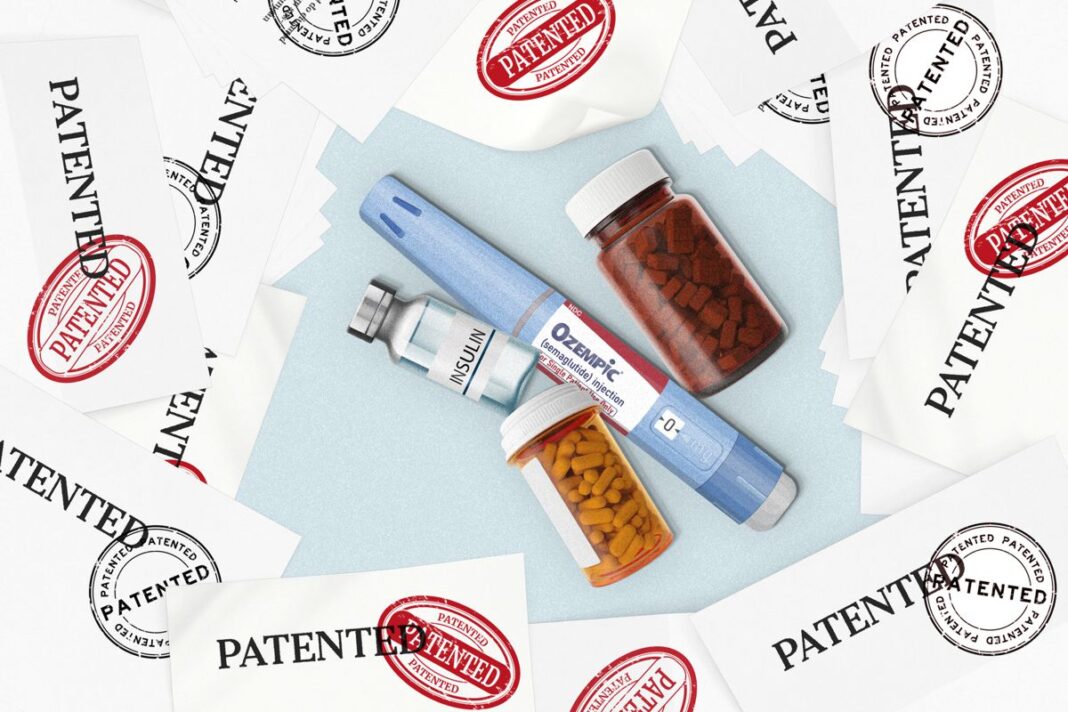
A drug patent generally lasts for 20 years, though the period of exclusivity—during which only the patent holder can produce the drug—varies by drug type.
That enables the creator to control prices and recoup the cost of development. After that, anyone can make and market the item.
But opening the market to competition can be delayed by new patents, which can be created at any time for a particular drug, and can cover a variety of things.
“[Drug manufacturers] come out with another formulation of the drug, which gives them another number of years. And they just keep going, and generics and biosimilars cannot come into the market,” Parant said.
That tactic is known as a patent thicket.
The problem has been around since at least 2001, when Carl Shapiro of the University of California–Berkeley described it this way: “A patent thicket [is] a dense web of overlapping intellectual property rights that a company must hack its way through in order to actually commercialize new technology.”
Now, a group of bipartisan lawmakers is pushing for adoption of the ETHIC Act, which aims to eliminate the use of duplicative, overlapping patents. They say eliminating these patent thickets will increase competition in the prescription drug market, and that will lower prices for patients and taxpayers.
Patient advocates hail the legislation, though some analysts say there is no evidence that patents are being used to stifle innovation.
By Lawrence Wilson and Sylvia Xu