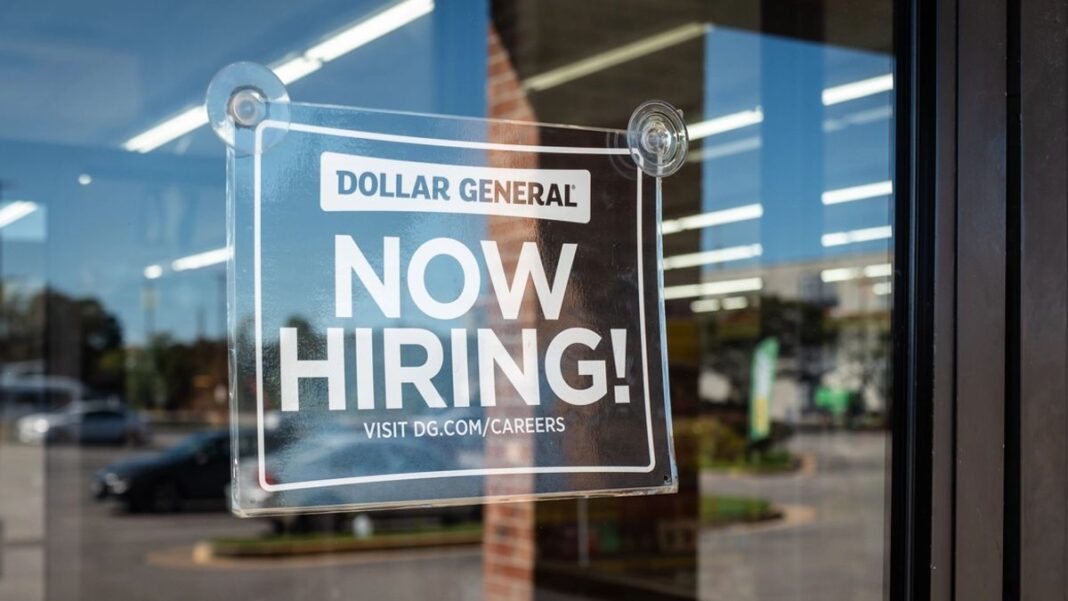


Labor demand has slowed, with private-sector hiring decelerating since firing on all cylinders this past spring.
Weekly applications for unemployment benefits fell sharply to their lowest level in almost 60 years, as the U.S. labor market remains steady.
Initial jobless claims declined by 22,000 to 187,000 for the week ending July 18, according to new Department of Labor data released on July 23.
Economists had forecast that the number of Americans filing jobless benefit applications would come in at 212,000.
This represented the lowest reading since April 1969, the second time this year.
The four-week average, which strips out week-to-week volatility, also fell to a nine-week low of 207,500.
Recent employment data reflect a solid labor market and continue to spotlight the “low-fire, low-hire” of the past two years.
Businesses are neither terminating staff nor expanding payrolls at a substantial pace as they monitor the fallout from the artificial intelligence (AI) boom and determine whether the various headwinds will subside.
“The labor market is also moving into a different phase,” David Miller, senior portfolio manager and CIO at Catalyst Funds, said in a note emailed to The Epoch Times.
“For now, the labor market remains supportive of growth, but it is no longer providing the same powerful tailwind it did over the last few years.”
For the second consecutive week, continuing jobless claims were below 1.8 million.
Recurring claims—a measure of the number of individuals currently receiving unemployment benefits—have been trending higher since late April but could be coming back down again.
Economists use this metric to determine the challenges workers have in finding employment. It could also reflect more Americans exhausting their benefits since many states cap eligibility at 26 weeks.
Labor demand has slowed, with private-sector hiring decelerating since firing on all cylinders this past spring.
U.S. firms added an average of 16,500 jobs per week in the four weeks ending July 4, down from the 19,250 registered in the previous four-week period, according to ADP.
Job postings on Indeed have surged since early June, and they are hovering around pre-pandemic levels.
By Andrew Moran