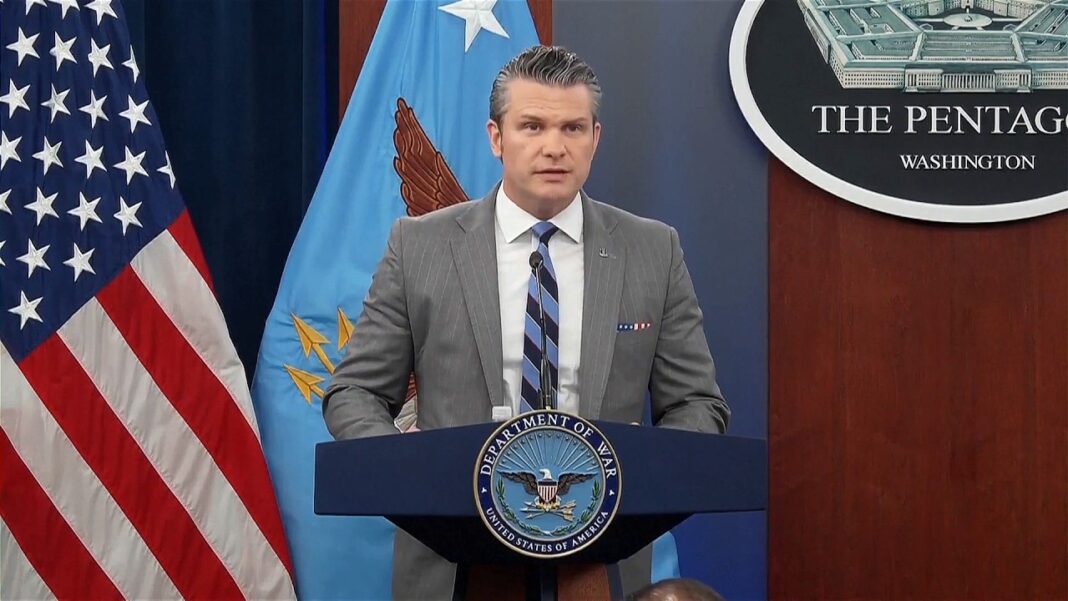
U.S. Secretary of State Marco Rubio warned that a concentrated mineral supply posed an ‘unacceptable risk’ to the West.
The United States and the European Union signed a memorandum of understanding on April 24 for a partnership on critical minerals.
While the plan does not specifically mention China, it comes as part of a broader push by the Trump administration to work with Western allies to loosen the Chinese Communist Party’s (CCP’s) grip on critical materials.
China controls roughly 90 percent of global capacity for the processing, smelting, and separation of all such materials, as well as for the manufacturing of magnetic materials.
U.S. Secretary of State Marco Rubio said the agreement reflected growing concern among Western economies about supply chain concentration.
“Obviously this shows a growing awareness and commitment throughout the world, particularly with our allies in the West and in Europe, [of] the importance of supply chains and critical minerals to the success of our economies and to our national security,” Rubio said.
He warned that the overconcentration of supply in a small number of countries posed “an unacceptable risk.”
“We need diversity in our supply chains, diversity in the places we get critical minerals,” he said, adding that the memorandum “isn’t just going to be a piece of paper” but would be implemented through “real actions.”
Rubio said the combined economic weight of the United States and the European Union made coordination critical.
“If you look at the buying power, the economic productivity power of the combination of the United States and the European Union, it’s extraordinary,” he said.
“We are, combined, the largest customers and users in the world, but we have to ensure that these supplies and these minerals are available for our futures in ways that are not monopolized in one place.”
He added that securing “reliable, affordable sources” of critical minerals would boost both economic growth and national security.
European Commission trade chief Maros Sefcovic said the success of the agreement would depend on implementation.
“The real test will be the execution of this project,” Sefcovic said.
“How can we transform these agreements which we are signing into concrete, tangible projects that will deliver for our business operators?” he said, adding the agreement marked a “very concrete delivery” in transatlantic cooperation.
By Owen Evans