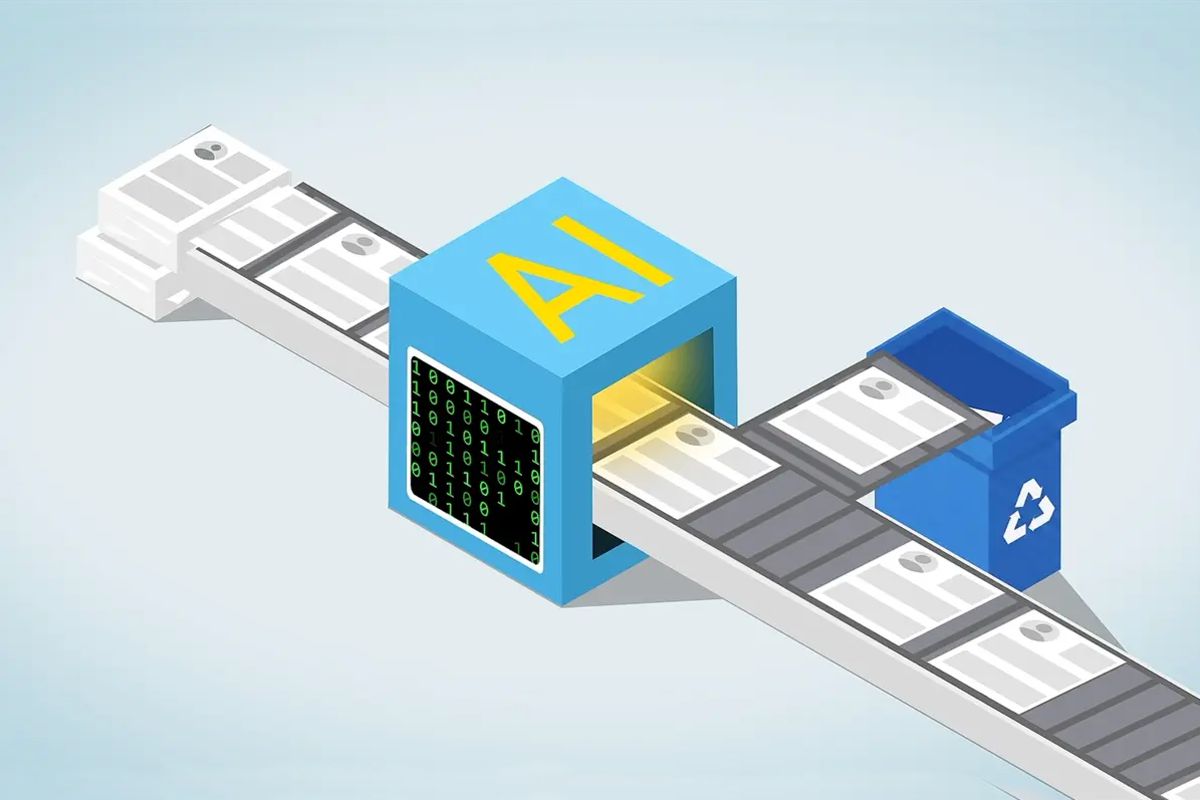


Recruiting and hiring professionals explain how to make sure your job application reaches human eyes.
Artificial intelligence (AI) has become a critical threshold that online job seekers must cross, but the technology has presented a unique challenge.
As employers increasingly lean on AI systems to screen, schedule, and evaluate candidates, applicants must learn how to get past the algorithm before reaching human consideration.
More hiring and recruiting professionals are using applicant tracking systems, many of which involve generative AI, according to a report from the International Research Journal on Advanced Engineering Hub. At a glance, these systems help overwhelmed employers sort and prioritize resumes, schedule interviews, and more.
Last year, nearly 98 percent of Fortune 500 companies used some type of applicant tracking systems, according to a Jobscan analysis. Research from Select Software Reviews found that 70 percent of large companies are using an applicant tracking systems, as well as 20 percent of small- to mid-sized businesses.
This has given rise to fears that resumes are being filtered out without any human judgment. Critics have brushed aside these concerns as myth or a misunderstanding of how an applicant tracking systems works, according to findings from Enhancv.
However, an EDLIGO analysis of 1,000 resumes from qualified candidates across multiple industries showed 43 percent of applicants were rejected for reasons that had nothing to do with their skills. The independent study ran selected, verified resumes through the top three applicant tracking systems platforms: Workday, Taleo, and Greenhouse. The 43 percent rejection rate was due to “formatting, parsing, or arbitrary filter failures.”
People who work in hiring say job seekers’ fears of an applicant tracking systems rejecting their resume aren’t unfounded.
“This isn’t just a claim; it is the fundamental reality of modern hiring,” Gloria Espina, founder of Recruitment Gal, told The Epoch Times.
Espina said job hunting has become a type of “algorithmic audition” that was born out of necessity.
“The ‘easy apply’ button has effectively broken the top of the hiring funnel. It turned applying for a job into a mindless, low-friction swipe,” she said. “As a result, recruiters are flooded with thousands of applications that aren’t even remotely suitable, which completely buries the highly qualified candidates under a mountain of digital noise.”
Espina acknowledged that an applicant tracking system is an essential gatekeeper to manage applicant chaos, but it’s also a rigid one.
“Most legacy systems are painfully literal. They scan for keywords but completely fail to identify entities or context. An algorithm might check the box for the word ‘leadership,’ but it misses the contextual power of ‘scaled a remote team across three time zones during a merger,’” she said. “Context is where the actual value of a candidate lives, but our systems are still grading them on a basic vocabulary test.”