

Hawaii’s law required gun owners to get permission to carry their weapons in stores and hotels.
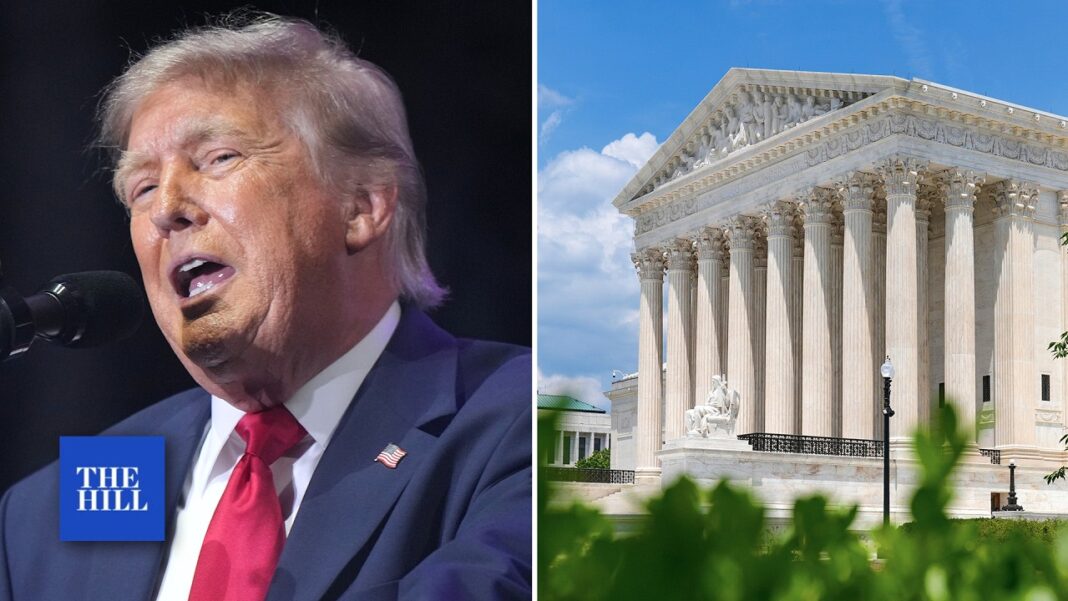
The U.S. Supreme Court voted 6–3 on June 25 to strike down a Hawaii gun law that banned residents from carrying concealed weapons in privately owned public places, such as gas stations and shopping malls.
The majority opinion in Wolford v. Lopez was authored by Justice Samuel Alito.
Justices Elena Kagan, Ketanji Brown Jackson, and Sonia Sotomayor dissented in the case, which was closely watched by gun rights advocates.
Alito said the Second Amendment “has the same meaning in all parts of the United States.”
“It cannot give way to ‘the spirit of Aloha’ in Hawaii … any more than it can yield to the spirit of the Big Apple … or the Windy City,” he said.
“It applies in the same way to our 50th State (where about 8% of adults possess guns) and our 49th State (where the figure is roughly 59%).
“Merely local attitudes can neither shrink nor inflate the meaning of fundamental Bill of Rights guarantees that apply to the States through the Fourteenth Amendment.”
Over the years, the court has invoked the so-called doctrine of incorporation to apply the constitutional protections of the Bill of Rights—the first 10 amendments to the Constitution—to the states. Initially, the Bill of Rights was understood to apply only to the federal government.
When the U.S. Court of Appeals for the Ninth Circuit reviewed the Hawaii law, it said the restrictions fell “well within the historical tradition,” a reference to the legal test the Supreme Court adopted in New York State Rifle and Pistol Association v. Bruen (2022), which held that the Second Amendment protects the right to carry firearms in public for self-defense.
The appeals court had upheld the state law, pointing to a New Jersey anti-poaching law from 1771 and a Louisiana law from 1865 that it said were “dead ringers” for Hawaii’s restrictions.
This is a breaking story and will be updated.
By Stacy Robinson and Matthew Vadum