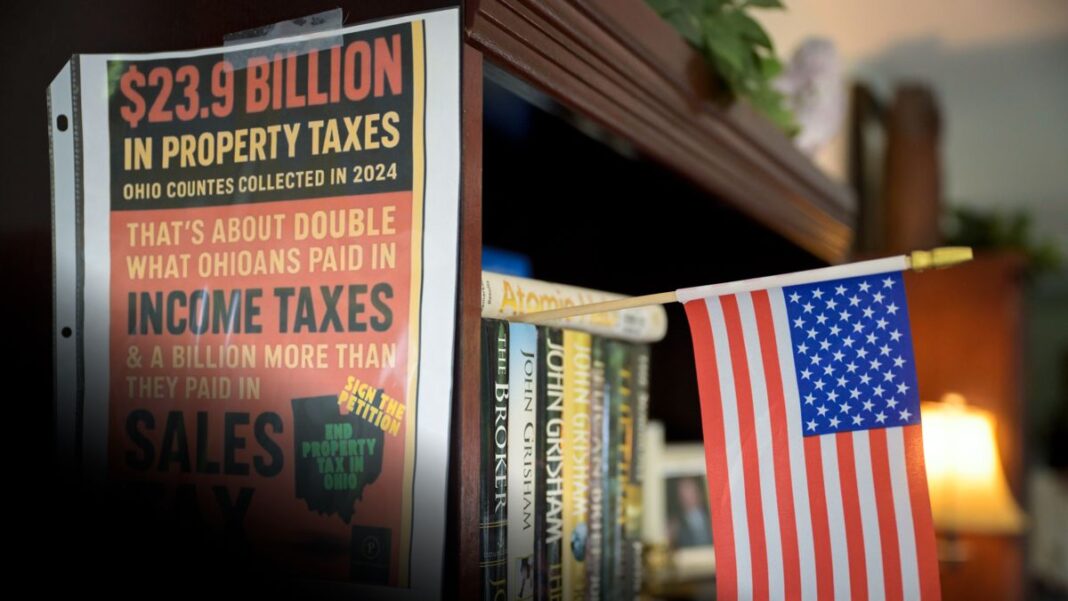


Public K–12 school spending now exceeds $1 trillion annually, and citizen groups say they’ve had enough.
MIDDLEBURG HEIGHTS, Ohio—At a petition table inside a Cleveland area gun show on a drizzly Saturday afternoon, citizens talk of an American Dream derailed.
There’s the elderly couple who paid off their mortgage decades ago but can’t afford the property taxes on their home. Their local government, theoretically, can seize the property and auction it off to someone else if the annual bills remain unpaid.
Then there’s the recent retiree who took a part-time job at Lowe’s to pay property taxes on his rental property and avoid raising his tenants’ rent.
Add empty nesters who can’t downsize to smaller houses because interest rates are too high, farmers describing an impossible situation, and recent college graduates groaning about moving further away from home to an affordable place.
Show goers, guns and ammo in hand, pause at Beth Blackmarr’s table on their way out and share with her those concerns. If 413,000 residents throughout the Buckeye State sign a petition before July 1, a public vote to eliminate local property taxes will appear on the November ballot.
If the signature count falls short, whatever is collected can be applied the following year, or however long it takes, said Blackmarr, media coordinator and a main volunteer for the 3,000-plus member Citizens for Property Tax Reform group.
“We are really hurting in Ohio,” she told The Epoch Times. “People never thought they’d be in this situation.”
Ohio isn’t alone. Forty-six states and the District of Columbia already have limits on annual local property tax levy increases, and leaders in Florida and Texas are pursuing additional legislation to limit government “flexibility” in how it raises revenues, according to a September report from McKinsey and Co., a global management consulting firm whose clients include state and local governments.
Schools, already strapped for cash, hang in the balance. School districts struggle with declining student enrollment, unfunded mandates, state and federal aid loss largely due to skyrocketing Medicaid costs, and spiking employee health insurance costs.
On the local level, mayors and town boards face similar challenges as they try to continue providing public safety, utilities, and infrastructure services.