

Everyone seems to be searching for the one thing that is destroying society, as if there were a single cause that could be identified, isolated, and addressed. People want a name, a face, a clearly defined enemy they can point to and say, “That is the problem.” That way of thinking is understandable because it simplifies a complicated world into something manageable. The problem is that it is completely wrong.
If you take an honest look at what is happening, the signs are not subtle. Attention spans are shrinking. Literacy rates are declining. Meaningful communication is breaking down. People are becoming more reactive and less thoughtful. Common sense seems to be a thing of the past. At the same time, the very tools and systems that were meant to improve our lives are being used in ways that produce the opposite effect. That is not coincidence. That is a pattern, and patterns tell a story if you are willing to pay attention to them.
The problem is that most people are simply not paying attention. At least not to all of it.
They are busy, distracted, and in many cases completely unaware that anything is changing at all. The shifts are gradual, almost unnoticeable from one day to the next, which makes them easy to ignore. There is no single moment where everything looks different. There is no clear line where people can say, “That is when it all changed.” Instead, it happens quietly, over time, until the effects are no longer easy to dismiss.
This article is not about pointing to one obvious villain and declaring the problem solved. It is about taking a closer look at a number of serious issues that are already affecting how people think, behave, and interact with the world around them. Each one of these, on its own, is significant enough to demand attention. The question is whether people are willing to see them for what they are before the consequences become too obvious to ignore.
Contender #1: Short-Form Video and the Death of Deep Thought
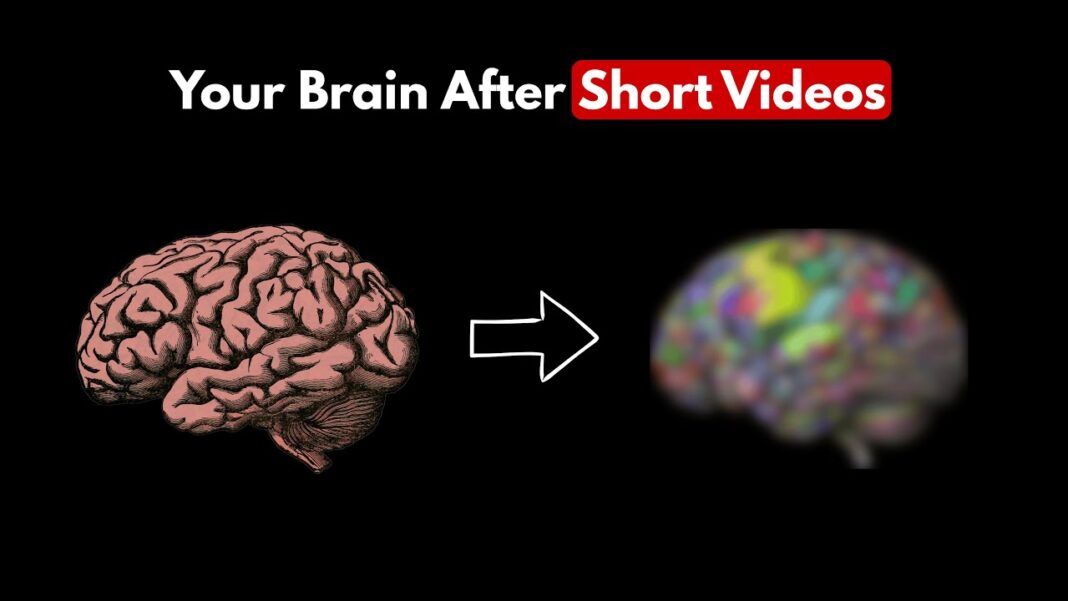
Short-form video has become one of the most powerful behavioral conditioning tools in modern society, and most people have no idea it is happening to them. What appears to be harmless entertainment is, in reality, a system designed to reshape how the brain consumes information. Platforms built around fifteen to thirty second clips are not simply responding to user demand. They are creating that demand. They are training it. The more a person engages with this type of content, the more their brain adapts to expect speed, stimulation, and constant novelty, while rejecting anything that requires patience or sustained attention.
This is not a theory. It is already showing up in measurable and observable ways. Teachers across the country are reporting that students are struggling to stay focused on lessons that require concentration. Employers are seeing younger workers have difficulty engaging with tasks that do not provide immediate feedback or constant stimulation. Even basic conversation is being affected. People interrupt more, listen less, and disengage quickly because they are no longer conditioned to process extended dialogue. The expectation has shifted from understanding information to reacting to it as quickly as possible.
The deeper issue is what this does to thinking itself. Complex problems cannot be understood in fragments. They require time, context, and the ability to process multiple layers of information. When a person becomes conditioned to consume information in short bursts, their ability to engage with complexity begins to decline. This leads to a culture that reacts instantly but understands very little. Opinions are formed based on incomplete information, and decisions are made without fully thinking through the consequences. That is not just a personal issue. That is a societal one.
At the extreme, this creates a population that is highly reactive and easily influenced. When people are no longer accustomed to thinking deeply, they become more likely to accept whatever information is presented in the simplest and fastest way. A short clip, taken out of context, can shape an opinion before a person has even had the opportunity to understand the full situation. This is where misinformation thrives, not because people are intentionally seeking it out, but because they are no longer equipped to process anything beyond the surface level.
All of this is happening quietly, without a clear moment where people recognize the shift. There is no single event that signals the change. It is a gradual conditioning process that takes place over time, slowly reshaping attention, behavior, and thought patterns. By the time the effects are obvious, the habits are already deeply ingrained.
How to combat it:
Reclaim your attention. Make a conscious decision to engage with long-form content that requires focus and effort. Read full articles instead of summaries. Watch complete discussions instead of highlights. Train your mind to stay with a topic long enough to understand it. The ability to think deeply is not something you keep automatically. It is something you maintain through deliberate effort.
Contender #2: Social Media and the Manufactured Reality of Human Interaction
Social media did not just change how people communicate. It changed why they communicate. What began as a tool to connect people has evolved into a system that rewards attention, validation, and reaction over honesty, understanding, and substance. The goal is no longer to communicate clearly or to learn from one another. The goal is to be seen, to be acknowledged, and to be reinforced.
You can see the results of this shift everywhere. People with thousands, sometimes millions, of followers who openly admit they feel isolated and disconnected. Individuals carefully curating every post, every image, and every comment to present a version of their life that often has very little to do with reality. Entire conversations reduced to short, emotionally charged exchanges where the goal is not to understand the other person, but to win the moment. What looks like connection on the surface is often nothing more than performance.
This is not just a cultural observation. There is measurable data behind it. Reports have consistently shown rising levels of anxiety, depression, and loneliness, particularly among younger generations who have grown up immersed in these platforms. The more time people spend engaging in this type of interaction, the more likely they are to compare themselves to others, measure their worth by reactions, and feel like they are falling short of a standard that does not actually exist.
At the extreme, social media creates environments where group behavior becomes dangerous. Online mobs can form quickly, often based on incomplete or misleading information, and target individuals with relentless attacks. Reputations can be destroyed in a matter of hours, sometimes over claims that are later proven to be false or exaggerated. The people participating in these attacks rarely face consequences, because the system itself removes accountability. It is easy to say things behind a screen that most people would never say face-to-face.
The deeper issue is that when communication becomes performance, authenticity disappears. When authenticity disappears, trust begins to erode. Without trust, relationships weaken, and when that happens at scale, it affects society as a whole. A population that does not trust one another cannot function effectively, because cooperation becomes difficult and division becomes the default.
This is happening while people are convinced they are more connected than ever.
How to combat it:
Stop treating social media as a substitute for real interaction. Limit the time spent scrolling and reacting. Engage in direct, honest conversations where accountability exists. Make a conscious effort to value truth over approval and substance over attention. Real connection requires effort, and it cannot be replicated through a screen.
Contender #3: Video Games and the Replacement of Reality
Video games are often dismissed as harmless entertainment, but that framing ignores how powerful they have become and how deliberately they are designed. Modern games are engineered environments built to capture attention, trigger reward systems in the brain, and keep players engaged for as long as possible. Every level, every unlock, every achievement is structured to create a loop of effort and reward that feels meaningful, even though it exists entirely within a controlled digital space.
For most people, that remains entertainment. But when you look at the extreme cases, the ones that surface briefly in news reports and then disappear, the seriousness becomes impossible to ignore. There have been documented incidents where teenagers, in separate and unrelated situations, reacted violently after losing access to video games, including cases where that violence escalated to the point of killing their own parents. These are rare, but they are real, and they show what can happen when dependency on a virtual system becomes so strong that the loss of it triggers a complete breakdown in judgment.
More commonly, the warning signs show up in ways that are becoming increasingly visible. Teachers dealing with aggressive outbursts when devices are taken away. Students reacting physically when access to games or screens is removed. Parents describing situations where a simple boundary turns into an explosive confrontation. There are recorded incidents of students attacking school staff after having gaming devices or privileges taken, with reactions that go far beyond frustration and into uncontrolled aggression. That is not normal behavior, and it does not appear out of nowhere.
There is also a broader pattern that cannot be ignored. Gaming sessions that stretch for hours, or even days, without awareness. Sleep being sacrificed to maintain progress in a virtual world. Responsibilities being delayed or avoided because the digital environment offers a faster and more predictable sense of accomplishment. For many, the line between entertainment and dependency is no longer clear, and when that line blurs, priorities begin to shift in ways that have real consequences.
The deeper issue is not just the game itself, but what prolonged exposure to these systems can condition. Fast responses, constant stimulation, immediate rewards, and repeated cycles of action without consequence can begin to shape behavior. Over time, that can erode patience, reduce impulse control, and train the mind to react first and think later. When that pattern carries over into real life, the results can be serious.
This is where the real danger lies. Not in the average player who enjoys a game and moves on, but in the growing number of individuals who begin to substitute virtual progress for real-world development. When a person becomes more invested in a digital environment than in their own life, priorities shift. And when those priorities are disrupted, the reaction can be far more intense than it should be.
How to combat it:
Put gaming in its proper place. Set firm limits and enforce them consistently. Encourage activities that require patience, effort, and real-world interaction. Most importantly, teach the difference between controlled environments and real life. Reality does not operate on reward loops, and people need to be equipped to handle that.
Contender #4: Computers, AI, and the Outsourcing of Thought
Computers and artificial intelligence have given us something no previous generation has ever had, instant access to information and the ability to generate answers in seconds. On the surface, this looks like progress, and in many ways it is. But like everything else on this list, the issue is not what the tool can do. The issue is how it is being used, and more importantly, what it is replacing.
For the first time in history, people are not just using tools to assist their thinking. They are replacing thinking altogether. A question is asked, an answer is generated, and the process stops there. There is no follow-up, no verification, no attempt to understand the reasoning behind the answer. The result is a growing number of people who can access information instantly but cannot explain, defend, or even fully understand what they are repeating.
While this is happening, something else is happening at the same time, and it is not getting nearly the attention it deserves. Literacy rates in the United States are declining in a way that should concern anyone paying attention. A significant percentage of adults struggle with basic reading comprehension, and many students are not meeting grade-level expectations. This is not just an education issue. It is a thinking issue. Reading is directly tied to comprehension, and comprehension is directly tied to reasoning. If a person cannot fully understand what they are reading, they cannot fully think through what they are being told.
Now combine those two realities. A population that is reading less, understanding less, and at the same time becoming more dependent on systems that provide answers without requiring thought. That is not progress. That is the dumbing down of society. That is regression, and it is happening quietly while people are distracted by the convenience of it all.
You can already see the effects in everyday life. People repeating headlines without reading the full story. Individuals forming strong opinions based on summaries, clips, or generated responses rather than actual understanding. Conversations where positions cannot be defended beyond surface-level talking points because there is no depth behind them. The appearance of knowledge is becoming far more common than knowledge itself.
At the extreme, this creates a population that is incredibly easy to influence. When people are not reading deeply and not thinking critically, they are far more likely to accept whatever is presented to them, especially if it is delivered quickly and confidently. A wrong answer presented with certainty, and maybe a little emotional manipulation, will often be accepted over a correct answer that requires effort to understand. That is not just a personal issue. That is a societal vulnerability.
The deeper issue is that thinking is a skill, and like any skill, it weakens when it is not used. Problem solving, reasoning, and critical analysis require effort. When that effort is removed, the ability begins to fade. Over time, this does not just affect individuals. It affects entire systems, from education to leadership to decision-making at every level.
This is all happening without a clear moment where people recognize the shift. There is no breaking point that forces awareness. It is a slow, steady decline, happening in the background while attention is focused elsewhere.
How to combat it:
Start thinking again. Read full-length material instead of summaries. Challenge what you are told and verify it. Work through problems before seeking answers. Use technology as a tool to enhance your thinking, not replace it. If you do not take responsibility for your own thinking, someone else will do it for you.
Contender #5: Cell Phones and the Illusion of Central Importance
Cell phones have become one of the most influential devices ever created, not just because of what they can do, but because of how constantly they are used. What started as a communication tool has evolved into something far more immersive, a device that delivers a continuous stream of notifications, messages, entertainment, and personalized content directly into a person’s hand at all times. It is no longer something people use occasionally. It is something many people are engaged with almost constantly.
This level of interaction creates a subtle but powerful shift in perception. When every notification is directed at you, when every feed is tailored to your preferences, and when every piece of content is designed to keep your attention, it begins to create the impression that everything in existence revolves around you. Over time, this can lead to an inflated sense of personal centrality, where the individual begins to expect constant attention, immediate responses, and ongoing validation from the world around them.
You can see the effects of this shift in everyday behavior. Conversations are interrupted because a notification demands attention. People struggle to sit through a meal, a meeting, or even a brief interaction without checking their phone. In public spaces, individuals are physically present but mentally disengaged, focused on their screens rather than the people around them. Even in relationships, there is a growing expectation of constant availability, where a delayed response is often interpreted as a problem rather than a normal part of life.
There is also measurable data that supports this pattern. Studies have shown that the average person checks their phone dozens, sometimes hundreds, of times per day. Screen time continues to rise across all age groups, with younger users often spending several hours a day on their devices. This is not occasional use. This is habitual, repeated engagement that shapes behavior over time.
At the extreme, this constant reinforcement of attention and immediacy begins to erode patience and impulse control. When people are conditioned to receive instant feedback and constant stimulation, they become less tolerant of delay, less comfortable with silence, and more reactive when their expectations are not met. Multiply that mindset across millions of individuals, and it becomes clear why conflict, frustration, and impatience are becoming more common.
The deeper issue is not the phone itself. It is the shift in awareness it creates. Life begins to be experienced through a screen rather than directly. Moments are captured instead of lived. Interactions are filtered instead of genuine. Over time, that disconnect has real consequences, not just for individuals, but for how society functions as a whole.
How to combat it:
Create intentional distance from your device. Turn off non-essential notifications. Set specific times where your phone is not in use, especially during conversations and important activities. Re-engage with the physical world and the people in it. Attention is one of your most valuable resources, and where you direct it matters.
Contender #6: The Internet and the Collapse of Productive Use
The internet has the potential to be one of the greatest tools ever created, offering instant access to knowledge, global communication, and opportunities that previous generations could not have imagined. In theory, it should be accelerating human progress at an unprecedented rate. The problem is not what the internet can do. The problem is how it is actually being used on a daily basis.
When you look at real-world behavior, the gap between potential and reality becomes obvious. A significant portion of internet usage is centered around entertainment, social media, and passive consumption. Hours are spent scrolling, watching, clicking, and reacting, often with very little retained value. People can spend an entire evening online and struggle to recall anything meaningful they gained from that time. The activity creates the feeling of engagement, but very little actual progress.
There is also a measurable pattern behind this. Reports consistently show rising screen time across all age groups, with many individuals spending multiple hours per day online outside of work or school-related activities. Much of that time is not spent learning, building, or improving skills. It is spent consuming content that is designed to hold attention rather than provide substance. This is not occasional behavior. It is becoming the norm.
At the extreme, this leads to a complete replacement of real-world engagement. Individuals withdraw from in-person interaction, delay responsibilities, and substitute digital activity for meaningful progress. It becomes possible to feel busy all day while accomplishing very little. Over time, this creates a sense of stagnation, where effort is being expended, but nothing of real value is being produced.
The deeper issue is that the internet creates the illusion of productivity. Access to information can feel like learning, even when no real understanding is developed. Watching others create can feel like progress, even when no action is taken. Engaging with content can feel like participation, even when nothing meaningful is contributed. This illusion makes it easy to justify continued use, even when it is not leading anywhere.
When this pattern is repeated across a large portion of the population, the impact becomes significant. Time that could be used for growth, development, and real-world contribution is redirected into passive consumption. The result is not just lost time, but lost potential.
How to combat it:
Use the internet with intention. Set clear boundaries on passive consumption and prioritize activities that contribute to growth and development. Seek out information that challenges you and apply what you learn in the real world. The internet can either be a tool for progress or a source of distraction. The difference comes down to how you choose to use it.
Contender #7: Mainstream Media and the Distortion of Reality
The role of mainstream media was once relatively clear. It was expected to present
information, provide context, and allow individuals to form their own conclusions based on the facts. That expectation has changed, and the shift has not been subtle. The issue is no longer just what is reported. It is how it is reported, what is emphasized, and just as importantly, what is left out.
You can see this in the way stories are framed. Headlines are written to generate reaction rather than understanding. Key details are sometimes omitted, not necessarily to fabricate a story outright, but to guide the audience toward a specific interpretation. A technically accurate statement can still be misleading if critical context is removed. This is where one of the most important realities comes into play. Lies through omission are still lies.
There is measurable evidence that public trust in mainstream media has declined significantly over time. Surveys consistently show that a large portion of the population no longer believes that major media outlets report information in a fair or unbiased way. That loss of trust does not happen without reason. It reflects a growing awareness that the information being presented is often filtered through a particular lens rather than delivered in a neutral form.
At the extreme, this creates a situation where people are not just disagreeing on opinions. They are operating from entirely different versions of reality. One group sees a story one way, another group sees it completely differently, and both are confident in their understanding because they are relying on different sources of information. This makes meaningful discussion almost impossible, because there is no shared foundation of facts to build on.
You can see the consequences in everyday conversation. People repeating talking points without fully understanding them. Debates that go nowhere because both sides are referencing different information. Strong opinions formed quickly, often based on headlines or brief summaries rather than a full understanding of the issue. The appearance of being informed has replaced the effort required to actually be informed.
The deeper issue is that when a population cannot agree on basic facts, it becomes extremely difficult to solve larger problems. Decision-making breaks down, trust continues to erode, and division becomes the default. A society that cannot establish a shared understanding of reality cannot function effectively for long.
This is all happening at the same time as declining attention spans and reduced critical thinking, which only makes the situation worse. When people are less likely to read deeply and more likely to react quickly, they become even more vulnerable to incomplete or misleading information.
How to combat it:
Make the effort to go beyond the headline. Seek out multiple sources, including those that challenge your current perspective. Take the time to understand the full context of a story before forming a conclusion. Do not rely on a single outlet to define your understanding of the world. Truth requires effort, and if you are not willing to look for it, you will be given whatever version is easiest to accept.
Contender #8: Cultural Degradation and the Sexualization of Identity
Society has made a very clear shift in what it promotes, rewards, and normalizes, and nowhere is that more obvious than in the increasing sexualization of culture. What was once understood to be private behavior between consenting adults has been pushed into the public sphere and, in many cases, presented as something that should be celebrated, displayed, and even centered as a primary identity. This is not about expression alone. It is about exposure, and exposure is being rewarded.
You can see this shift in very direct and concrete ways. Social media platforms filled with explicit or suggestive content that is easily accessible to younger audiences. Entertainment that pushes boundaries further and further in order to capture attention. Events and programs where children are introduced to adult-themed performances and behaviors that would not have been considered appropriate even a generation ago.
There have been widely publicized situations where performers in drag have been invited into schools or libraries for events with children, sometimes extending beyond simple readings into performances that include exaggerated and sexually suggestive behavior. Adult expression is being brought into spaces where it does not belong, particularly when children are involved, and calling that out is not about tradition. It is about basic standards of appropriateness of what a developing child is exposed to.
The broader pattern is not hard to identify. Content that once would have been restricted to adult audiences is now easier to access than ever. Younger individuals are being exposed to it earlier, and in many cases, encouraged to engage with it. At the same time, entire identities are being built around sexuality, with value measured by attention, visibility, and reaction rather than substance, character, or contribution.
When that becomes the standard, it reshapes what people believe is important. We have a generation of young people, many of them impressionable young ladies, whose sole aspiration is to become an “Only Fans” model. This may start innocently, but too often it ends in actions being taken to an unhealthy, and even unwanted, level. Actions that stay alive on the internet forever.
There are real consequences to this shift. Rising levels of anxiety, self-comparison, and body image issues, particularly among younger demographics, are well documented. When people are taught to measure their value based on appearance and attention, they will constantly compare themselves to others and feel like they are falling short. That is not empowerment. That is a system that keeps people chasing validation without ever reaching it.
At the extreme, this leads to the commodification of identity. People are no longer just expressing themselves. They are presenting themselves as products. Personal worth becomes tied to engagement, views, and reactions. When that happens, depth disappears. A person is no longer valued for who they are as a whole. They are valued for what they are willing to display.
The deeper issue is not just about individual behavior. It is about cultural direction. When a society begins to normalize the public display of what was once private, and when that normalization extends into environments involving younger audiences, it raises serious questions about boundaries, judgment, and long-term impact. A culture that loses its sense of proportion loses its ability to distinguish between what is appropriate and what is not.
How to combat it:
Be intentional about what you consume and what you support. Set clear boundaries, especially when it comes to what is appropriate for children. Focus on substance, not exposure. Encourage depth, character, and personal development over attention-seeking behavior. Culture is shaped by what people accept, and what people accept can be changed.
Contender #9: Influencers, Entertainment, and Misplaced Authority
We are living in a time where influence is no longer earned in the traditional sense. It is assigned, often based on visibility rather than substance. The very term “influencer” should raise questions, yet it has been normalized to the point where it is rarely challenged. People are being placed in positions of influence not because of what they have accomplished, but because of how many people are watching them.
You can see this shift clearly in everyday life. Individuals with little to no formal knowledge or real-world experience speaking confidently on complex topics and being taken seriously simply because they have a large following. Young people modeling their behavior, opinions, and even life choices after personalities they have never met. Advice being given and accepted based on popularity rather than credibility. The number of followers has become a substitute for actual expertise.
This problem extends well beyond social media and into the entertainment industry. Actors, musicians, and public figures, individuals whose profession is to perform, are often treated as authorities on issues that have nothing to do with their field. These are people who are paid to memorize lines, follow direction, and portray characters, yet they are frequently elevated to positions where their opinions carry significant weight on real-world matters. That is not a reflection of expertise. It is a reflection of misplaced trust.
At the extreme, this creates a society where perception replaces reality. A person who has mastered the ability to attract attention is given the same, or even greater, influence than someone who has spent years developing knowledge, skills, and experience. When that happens, the standard for credibility collapses. People begin to follow voices that are loud and visible rather than voices that are informed and reliable.
You can see the consequences in how information spreads. Trends, opinions, and even misinformation can move rapidly through large audiences simply because they are attached to a recognizable name or face. People repeat what they hear, not because they have verified it, but because they trust the source based on familiarity. That is not informed thinking. That is influence without accountability.
The deeper issue is that when influence is detached from merit, it changes what people strive for. Instead of building real skills or developing meaningful expertise, the focus shifts toward gaining attention. The goal becomes being seen, not being capable. Over time, this lowers the overall standard of what is considered valuable in a society.
How to combat it:
Start questioning who you are listening to. Ask what they have actually done to earn their influence. Separate visibility from credibility. Seek out individuals who have demonstrated knowledge, experience, and integrity in their field. Influence should be earned through substance, not handed out through popularity.
Contender #10: Politics, Religion, and the Breakdown of Foundational Stability
A society cannot function without a stable foundation, and that foundation is built on shared values, clear principles, and a general agreement on what is right and what is wrong. In the United States, those principles were heavily influenced by Judeo-Christian values, which emphasized personal responsibility, moral accountability, respect for law, and a clear structure for how individuals should interact with one another. That foundation was not perfect, but it provided consistency, and consistency is what allows a society to function over time.
What we are seeing now is a steady erosion of that foundation, driven by political division, declining trust in leadership, and a growing willingness to discard the principles of decency that originally held things together. Politics has shifted from governance to power, where winning is prioritized over doing what is right. This is not limited to one side, but the intensity of ideological push in recent years has accelerated the divide. People are no longer disagreeing on policy alone. They are disagreeing on fundamental values.
At the same time, there is a growing push to replace or reshape foundational beliefs without considering whether the replacements are compatible with the system they are being introduced into. This is particularly evident when it comes to religion and cultural values. Not all belief systems align in a way that allows for cohesion. Some are fundamentally different in how they define authority, law, individual rights, and social structure. Ignoring those differences does not make them go away. It creates friction, and over time, that friction leads to division.
You can see the effects in the real world. Increasing polarization where compromise is seen as weakness. A breakdown in trust between citizens and institutions. Conflicts that go beyond disagreement and move into hostility. People no longer seeing each other as individuals with different opinions, but as opposing sides that must be defeated. That is not a healthy political environment. That is a fractured one.
At the extreme, this leads to instability. When a society no longer shares a common foundation, it begins to pull apart. Laws become contested, values become inconsistent, and the ability to function as a unified system weakens. A country cannot operate effectively when large portions of its population are working from completely different sets of principles.
The deeper issue is that a foundation is not something you can constantly tear down and rebuild without consequences. Stability requires continuity. It requires a set of shared beliefs that people can rely on, even when they disagree on other issues. When that continuity is broken, the system becomes unpredictable, and unpredictability leads to conflict.
This is happening at the same time as declining attention, reduced critical thinking, and increased misinformation. That combination makes it even more difficult for people to recognize what is happening and respond to it in a meaningful way.
How to combat it:
Understand the foundational principles that your society was built on and why they matter. Engage in political discussions with the goal of understanding, not just winning. Getting “your way” does not automatically ensure that way is actually the best way. Recognize that not all ideas are compatible and that stability requires a shared framework. If the foundation is ignored, everything built on top of it becomes unstable. The foolish man builds his house upon the sand, and construction is booming right now.
Contender #11: Ideological Confusion and the Rejection of Reality
One of the most significant shifts happening in society right now is the growing willingness to separate reality from perception and then treat both as if they are equal. This is often presented under the banner of being “woke,” a term that originally implied awareness but has increasingly come to represent something very different. In practice, it has come to mean that personal belief and identity should be accepted as truth, even when they directly conflict with objective reality.
To understand how this idea gained traction, it is important to look at where some of it came from. John Money was a psychologist who introduced the concept that gender identity could be separated from biological sex. His theories were not just academic. They were tested in real-world situations, most notably in a case involving a young boy who was raised as a girl after a medical accident. The case was initially presented as a success, used to support the idea that identity could be shaped independent of biology. What was not widely acknowledged at the time was that the outcome was deeply problematic. The individual struggled significantly, rejected the imposed identity, and the situation ultimately ended in tragedy.
Despite the failure of these early applications, the underlying idea did not disappear. It evolved, expanded, and became embedded in broader cultural and institutional thinking. Today, it has grown into a much larger movement that insists identity is entirely self-defined and must be accepted as such, regardless of biological or objective reality.
A major tool used to justify this way of thinking is the phrase “social construct.” Students and young adults are increasingly taught to dismiss ideas, structures, and even observable realities by labeling them as nothing more than constructs created by society. The implication is that if something is a social construct, it can be redefined or ignored entirely. That sounds convincing on the surface, but it falls apart the moment it is examined honestly.
The harsh reality is that everything created or organized by human beings is, by definition, a social construct. Language is a social construct, and without it, this article could not exist or be understood. Laws are social constructs, yet they are what allow societies to function with order. Money is a social construct, but it determines economic stability and survival for millions of people. Even education itself is a social construct, including the very institutions teaching students to use that phrase.
When someone says, “that’s just a social construct,” what they are often revealing is not a deep understanding of the issue, but a lack of it. It becomes a way to dismiss rather than engage, to avoid thinking rather than apply it. Instead of analyzing whether something is valid, necessary, or beneficial, the label is used as a shortcut to shut down discussion. That is not critical thinking. That is thought laziness at its highest level. When that kind of thinking spreads, it does not lead to understanding. It leads to decay. What begins as “social construct” quickly turns into social destruct.
You can see the consequences of this in real-world situations that would have been unthinkable not long ago. Individuals making claims that are clearly disconnected from observable reality and expecting those claims to be accepted without question. Authority figures going along with it out of fear of being challenged or labeled. Institutions reinforcing it rather than correcting it. When a society begins to validate what is clearly not real, it is not showing compassion. It is abandoning logic.
At the extreme, this leads to a complete breakdown in reasoning. If reality can be dismissed as a construct and replaced with personal belief, then there is no stable foundation for truth. If there is no stable foundation for truth, meaningful communication becomes nearly impossible, because there is no common ground to stand on. A society cannot function if it cannot agree on basic facts about the world it exists in.
The deeper issue is not disagreement. Disagreement is normal and necessary. The issue is the rejection of reality itself. When objective truth is replaced with subjective interpretation, everything becomes negotiable. Once that happens, it is no longer possible to solve problems effectively, because there is no shared understanding of what the problem actually is.
This is happening at the same time as declining critical thinking, reduced attention spans, and increased reliance on external systems for answers. That combination makes it even harder for people to recognize the issue, let alone address it.
Truth does not change based on how someone feels about it. Offense does not determine correctness. Reality exists independent of personal belief, and any system that attempts to ignore that will eventually fail.
How to combat it:
Stand firmly on logic, evidence, and observable reality. Do not accept labels as substitutes for understanding. When you hear the phrase “social construct,” ask what purpose that construct serves and whether it contributes to stability or chaos. Engage with ideas fully instead of dismissing them quickly. A society that maintains a clear understanding of reality is a society that can function. One that does not will struggle to hold itself together.
Contender #12: Devaluation of Human Life
One of the most serious indicators of a society in decline is how it defines and values human life. When that definition becomes unclear, inconsistent, or conditional, everything built on top of it becomes unstable. The issue is not just moral or philosophical. It is foundational. If a society cannot clearly define when human life begins and why it matters, it opens the door to treating life as something that can be granted or taken away based on convenience.
A common way this issue is dismissed is through the phrase “clump of cells,” used to reduce the unborn to something insignificant. On the surface, it sounds scientific. In reality, it is a rhetorical shortcut that collapses under even basic biological understanding. Every human being, at every stage of existence, is a collection of cells. An adult human is a clump of roughly 37 trillion cells. A newborn human is a clump of cells. A human toddler is a clump of cells. The difference is not what they are made of. The difference is what stage they are in of the continuous process of human development.
Biology is not ambiguous on this point. Human development is a single, uninterrupted sequence that begins at fertilization. When a sperm fertilizes an egg, a new organism is created with its own unique human DNA, distinct from both parents. From that moment forward, the process unfolds in a predictable and continuous progression: zygote, embryo, fetus, infant, child, and adult. There are no gaps in this sequence, and there are no points where the organism suddenly becomes something it was not before. Each stage is simply the same human being at a different point in development.
This continuity matters because it exposes the inconsistency in how value is assigned. If the entity at conception is dismissed as “just cells,” then that same logic must apply to every later stage, because nothing fundamentally changes except the stage of development. The only way to avoid that conclusion is to choose an arbitrary point and declare that before this moment, life does not matter, and after it, it does. That is not science. That is preference.
You can see this arbitrariness in the shifting standards that are often used. Viability is one example, which has changed over time as medical technology has improved. What was once considered non-viable at one point in history is now survivable. If the definition of life depends on a moving target like that, then it is not a stable definition. It is a convenient one. The same applies to other proposed markers such as heartbeat, brain activity, or birth itself. None of these represent the beginning of life. They are milestones within it.
At its core, the issue is simple. A human organism begins at conception and continues through a continuous developmental process until death. There is no point in that process where the organism becomes human. It is human from the beginning. Ending that process at any stage is not the removal of potential life. It is the termination of an existing human life at an earlier point in its development.
What makes this shift even more concerning is how society’s mindset toward having children has changed. There was a time when children were widely seen as a blessing, something to be valued and welcomed. Increasingly, that mindset has shifted toward viewing children as a burden. The reason for that shift is not complicated. It is rooted in a growing level of self-focus, where the idea of placing the needs of another human being above one’s own is seen as something to avoid rather than embrace. That is not just a personal preference. It is a cultural shift, and it carries long-term consequences.
If that mindset continues unchecked, it creates a dangerous trajectory. A society that no longer values the creation of life will eventually face the consequences of that decision. Declining birth rates are already being observed in many developed nations, and while the causes are complex, the underlying shift in priorities cannot be ignored. If enough people decide that having children is not worth the sacrifice, the long-term outcome is not difficult to understand. A society that does not replace itself will eventually cease to exist.
There is also a perspective that is almost never considered, and it speaks directly to the value of every individual life. The odds of any one person being born are so extraordinarily small that they are almost impossible to comprehend. Every decision, every event, every moment in the lives of both parents, and their parents before them, and countless generations before that, had to align exactly as they did for that specific life to exist. Change even one variable in that chain, and the outcome is different. That life does not happen. When you look at it that way, existence itself is not random. It is incredibly rare.
That reality changes how life should be viewed. Every person who has ever lived, and every person who ever will live, represents a set of circumstances so precise that their existence is, in many ways, a once-in-eternity occurrence. That is not something insignificant. That is something that should be recognized as a profound opportunity.
Every child born into the world represents raw, unknown potential. When a child is born, there is no way to fully predict who they will become or what they may contribute. When Albert Einstein was born, his parents had no idea that he would go on to fundamentally change how humanity understands the universe. That is the nature of potential. It is unseen at the beginning, but it exists nonetheless. The same is true for every child. Any one of them has the capacity to impact the world in ways that cannot be predicted at the moment of their birth.
When life is reduced to something disposable, that potential is dismissed before it has any chance to exist. That is not just the loss of an individual life. It is the loss of everything that life could have become.
The deeper issue is what this says about how society assigns value. When human life is treated as conditional, when it is dependent on stage, location, or level of development, it creates a precedent. It establishes the idea that some lives matter more than others, or that some lives can be dismissed entirely. That is not a small shift. That is a fundamental change in how a society views itself.
At the extreme, this leads to the normalization of ending human life for reasons that are not based on necessity, but on convenience, preference, or circumstance. When that line is crossed, it does not remain contained. The logic used to justify it can be extended, redefined, and applied in other areas. Once the value of human life becomes negotiable, it does not stay limited to one issue.
How to combat it:
Start with clarity. Understand the biological reality of human development and do not rely on simplified phrases that avoid the issue rather than address it. Recognize the inherent value and rarity of human life. Reevaluate the cultural shift that has turned children from a blessing into a burden. Understand that raising a child is not just a responsibility, but an investment in the future. A society that values life, especially at its earliest stages, is a society that has a future. One that does not will eventually face the consequences of that decision.
The Reality We Cannot Ignore
Each one of these issues, on its own, is serious enough to demand attention. Declining attention spans, weakened literacy, manufactured communication, engineered addiction, the outsourcing of thought, the illusion of importance, the misuse of powerful tools, the distortion of information, the degradation of culture, the rise of influence without merit, the breakdown of foundational stability, the devaluation of human life, and the rejection of reality itself are not minor concerns. They are measurable, observable shifts that are already affecting how people think, behave, and interact with the world around them. These are not distant possibilities or theoretical outcomes. They are happening now, in real time, whether people choose to recognize them or not. And where these trends can end up should terrify everyone.
For years, people have been trying to identify the single greatest threat to society, as if there were one defining issue that stood above all others. Something obvious, something easy to isolate, something that could be pointed to and addressed. That way of thinking creates a sense of control, but it also creates major blind spots. After examining each of these issues closely, it becomes clear that the real danger is not found in any one of them alone. The real danger is what happens when all of them exist at the same time, each one reinforcing the others, each one accelerating the impact of the next. We are creating the perfect storm for society to crumble under its own weight.
When you take a step back and look at the full picture, the pattern becomes difficult to ignore. A population that is increasingly distracted, reading less, thinking less, reacting more, and relying on external systems and influences for direction is not a stable foundation for a functioning society. When communication breaks down, when trust erodes, and when reality itself becomes negotiable, the ability to solve problems begins to disappear. These are not isolated failures. They are interconnected, and their combined effect is far greater than the sum of their parts.
Society is a reflection of the choices we make, both as a collective group and as individuals, but it is also a result of what society allows. If we continue to allow behaviors, systems, and influences that weaken critical thinking, distort reality, and erode foundational values to grow and flourish, then we must also be willing to accept the consequences that come with those choices. Those consequences are not abstract. They show up in declining standards, increasing division, lower birth rates, violence and social instability, and a growing inability to function cohesively.
The most concerning part is not just what is happening, but how little attention it is receiving from those who are being affected by it. Many people are too distracted, too comfortable, or too unaware to recognize the extent of the shift that is taking place. There is no single moment where everything changes. There is no clear warning sign that forces immediate action. It is a gradual process, unfolding over time, which makes it easy to ignore until the effects become too significant to dismiss.
At some point, the question has to be asked, not about which issue is the greatest threat, but about how long this pattern can continue before the damage becomes irreversible. If the current trajectory remains unchanged, the outcome will not be a mystery. It will be the natural result of a series of choices that were made, and just as importantly, a series of things that were allowed to continue without challenge.
The responsibility for what happens next does not belong to one group, one system, or one idea. It belongs to everyone who participates in and contributes to the direction society takes. When it comes to this dirty dozen, the destroyer of society is not something that can be identified in a single place or removed with a single solution. It is reflected in the collective behavior of individuals who choose convenience over effort, reaction over thought, and comfort over truth.
But when society is finally forced to face the harsh truth, it is seldom comfortable. It is actually the exact opposite. It is uncomfortable. It is everything we should have been trying to avoid coming to fruition. Our own worst enemy is our own ego, hubris and stupidity.
If these choices do not change, the outcome should not come as a surprise.
It will be exactly what we allowed to happen.