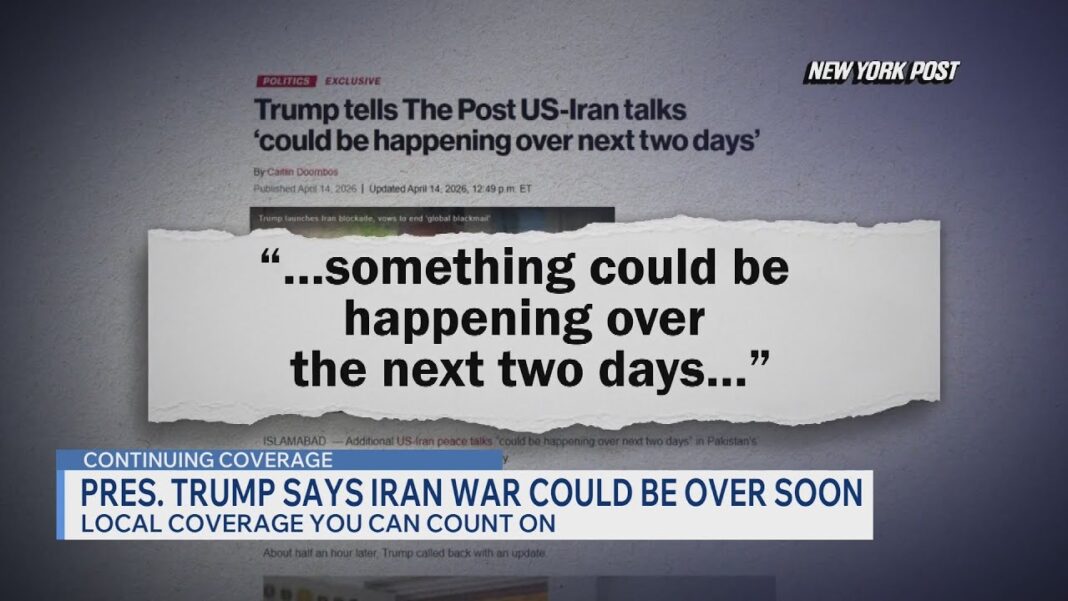


A new round of negotiations between Washington and Tehran could begin within days, according to the U.S. president.
The United States said on April 15 that a sweeping naval blockade of Iranian ports had been fully implemented, effectively halting the vast majority of the country’s seaborne trade.
U.S. Central Command Commander Adm. Brad Cooper said in a post on X that U.S. forces maintain “maritime superiority in the Middle East.”
Cooper added that in less than 36 hours since the blockade was implemented on April 13, U.S. forces have completely halted economic trade going into and out of Iran by sea, adding that about 90 percent of the Iranian economy depends on maritime trade.
The blockade of Iranian ports aims to increase pressure on Tehran after negotiations on April 12 in Islamabad, Pakistan, failed to produce an agreement.
U.S. Vice President JD Vance, who led the American delegation, said Iran had rejected Washington’s terms for a lasting peace. According to Vance, the main obstacle was Tehran’s refusal to commit to abandoning nuclear weapons development.
The U.S. military said in an April 14 post on X that the blockade was being enforced “impartially against vessels of all nations” seeking access to Iranian ports in the Arabian Gulf and Gulf of Oman.
U.S. forces were continuing to support freedom of navigation for ships transiting the Strait of Hormuz to non-Iranian destinations, U.S. Central Command said.
Shipping in the Gulf and along the narrow Strait of Hormuz, which carries around a fifth of the world’s oil, has been restricted since the United States and Israel began strikes on Iran on Feb. 28, sending global oil prices surging to highs not seen since 2022.
Iran effectively shut down the Strait of Hormuz, a crucial global waterway for crude and gas transport, cutting shipments from the Gulf to global buyers, particularly in Asia and Europe, leaving importers scrambling to secure alternative supplies.
Under the U.S. blockade of Iranian ports, more vessels were being turned back, including U.S.-sanctioned, Chinese-owned tanker Rich Starry, which was making its way back to the Strait of Hormuz on April 15 after exiting the Persian Gulf.
The Iranian military warned on April 13 that no port in the Persian Gulf or Gulf of Oman would remain secure if Washington proceeded with the blockade of Iran’s ports.