

Trump said Iran will face ‘problems like they have never seen before’ if it refuses talks.
U.S. President Donald Trump said on April 20 that he believes Iran will eventually return to negotiations, after Iranian officials said they would not participate in talks due to the U.S. naval blockade of Iranian ports.
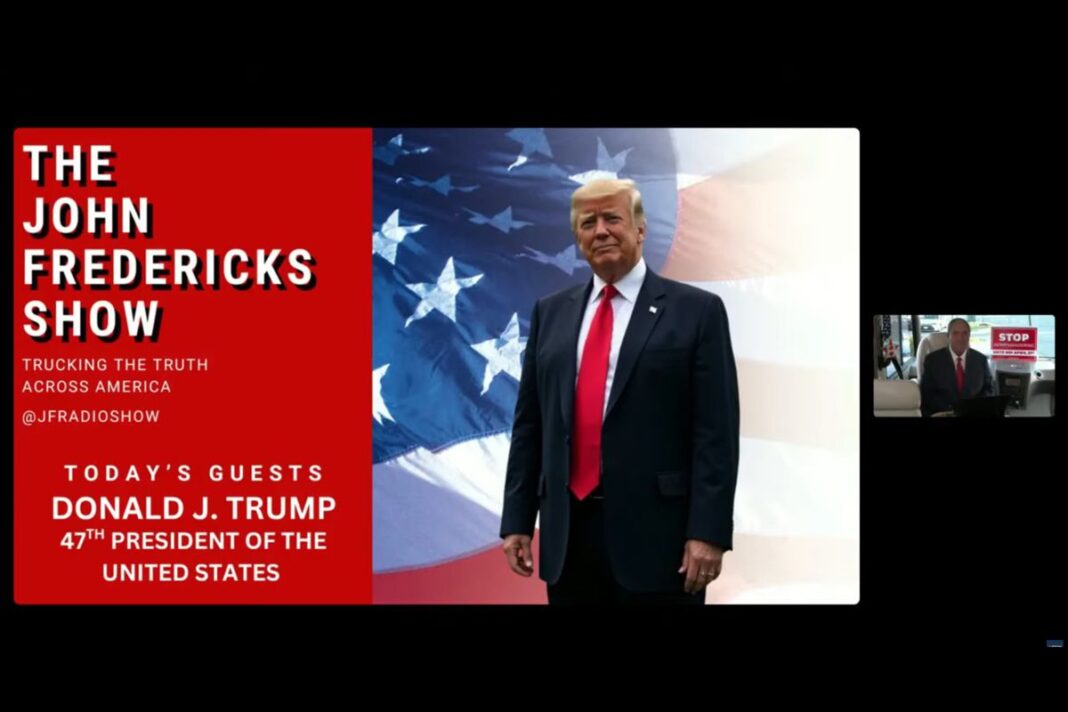
“Well, they’re going to negotiate. And if they don’t, they’re going to see problems like they have never seen before,” the president said during an interview with “The John Fredericks Radio Show.”
Trump did not specify what actions the United States may take if Iran refuses to engage in further talks. He expected Iran to make “a fair deal” that would end the war and ensure Iran has “no access to, no chance of having a nuclear weapon.”
“They will build their country back up, but they will not have a nuclear weapon,” he said. “We can’t allow that to happen. That could be the destruction of the world, we’re not going to let that happen.”
In an April 20 post on Truth Social, Trump said the deal his administration is negotiating with Iran would be “far better” than the Joint Comprehensive Plan of Action (JCPOA), a nuclear agreement the Obama administration signed with Iran in 2015. It was later terminated by Trump during his first term.
Trump called the JCPOA “one of the worst deals ever made” for U.S. security, saying it enabled Tehran to develop nuclear weapons.
“If I did not terminate that ‘Deal,’ Nuclear Weapons would have been used on Israel, and all over the Middle East, including our cherished U.S. Military Bases,” he stated.
Trump said in a subsequent post that he believes the deal with Iran would happen “relatively quickly.”
Iranian parliament speaker Mohammad Bagher Ghalibaf said in an April 20 post on X that Tehran will not negotiate with Washington while under threat.
Ghalibaf accused the United States of violating the ceasefire by imposing a naval blockade of Iranian ports and warned that the Iranian regime has been “preparing to reveal new cards on the battlefield.”
Trump has also accused Iran of violating the temporary ceasefire by firing shots on April 18 aimed at a French ship and a freighter from the UK in the Strait of Hormuz. He noted that the U.S. delegation will travel to Pakistan on April 20 for another round of talks with Iran.
U.S. Vice President JD Vance, special envoy to the Middle East Steve Witkoff, and special envoy Jared Kushner are expected to participate in the talks.