

The U.S. economic blockade on Iran pressures Beijing indirectly. Analysts say that’s Trump building leverage ahead of his summit with Xi.
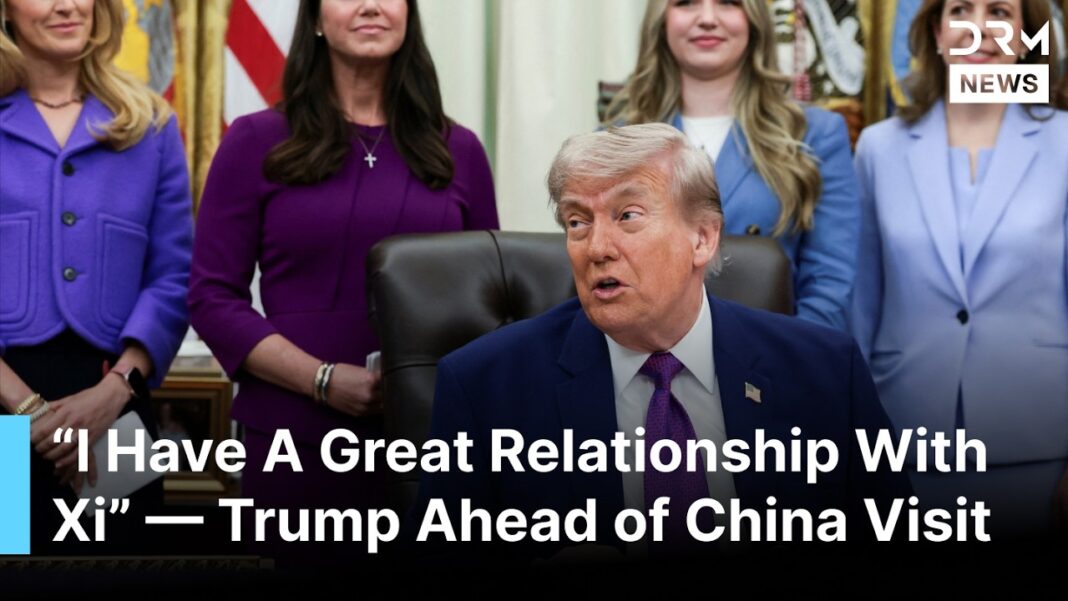
As the United States ups its economic pressure to force the Iranian regime to abandon its pursuit of nuclear weapons, Washington’s squeeze on Tehran has extended to Beijing, a major source of support for the Iranian economy through illicit oil trade. Analysts say that’s partly because the U.S. president is increasing his leverage ahead of his scheduled visit to Beijing in mid-May.
On April 15, Washington launched Operation Economic Fury to cut off Iran’s revenue streams.
On the same day, Iranian President Masoud Pezeshkian said that the United States “intends to take us down first, and then deal with China,” when he received Chinese humanitarian supplies in Tehran. A U.S. naval blockade of Iran began two days prior.
The Iranian president’s remarks may be an example of a junior partner trying to make the case for more support, but there’s an “element of truth,” said William Lee, chief economist at the consultancy Global Economic Advisors.
“The ultimate target here is China,” he told The Epoch Times, adding that the United States wants to “starve China of the source of cheap oil.”
In association with the maximum-pressure economic campaign, the U.S. Treasury has warned two Chinese banks of secondary sanctions over supporting the Iranian economy and sanctioned a large Chinese independent oil refinery, Hengli Petrochemical (Dalian) Refinery Co. Ltd.
In addition, the U.S. military intercepted a stateless ship in the Indian Ocean in late April. The vessel was en route to Southeast Asia, carrying millions of barrels of Iranian oil likely destined for China.
Sanctioning a Large Chinese ‘Teapot’
Over the past decades, Beijing has purchased most of Iran’s oil despite U.S. sanctions. Oil revenue has kept the Iranian economy afloat, with funds channeled to its military. It has also provided China with a discounted energy source and a platform to conduct business in Chinese yuan, hence bypassing U.S. sanctions in the dollar system.
Cutting off funds to the Iranian military means restricting its revenue stream from its oil exports, of which China is the main customer. Unlike Chinese state-owned enterprises, which avoid buying Iranian oil for fear of subjecting major Chinese banks to secondary sanctions, independent oil refineries known as “teapots” rely mainly on Iran as a supplier.
By Terri Wu
Read Full Article on TheEpochTimes.com